

Backlight 2026
KATERINA ANGELOPOULOU (Greece)
The Fumes of Mars, 2025
Valokuvakeskus Nykyaika
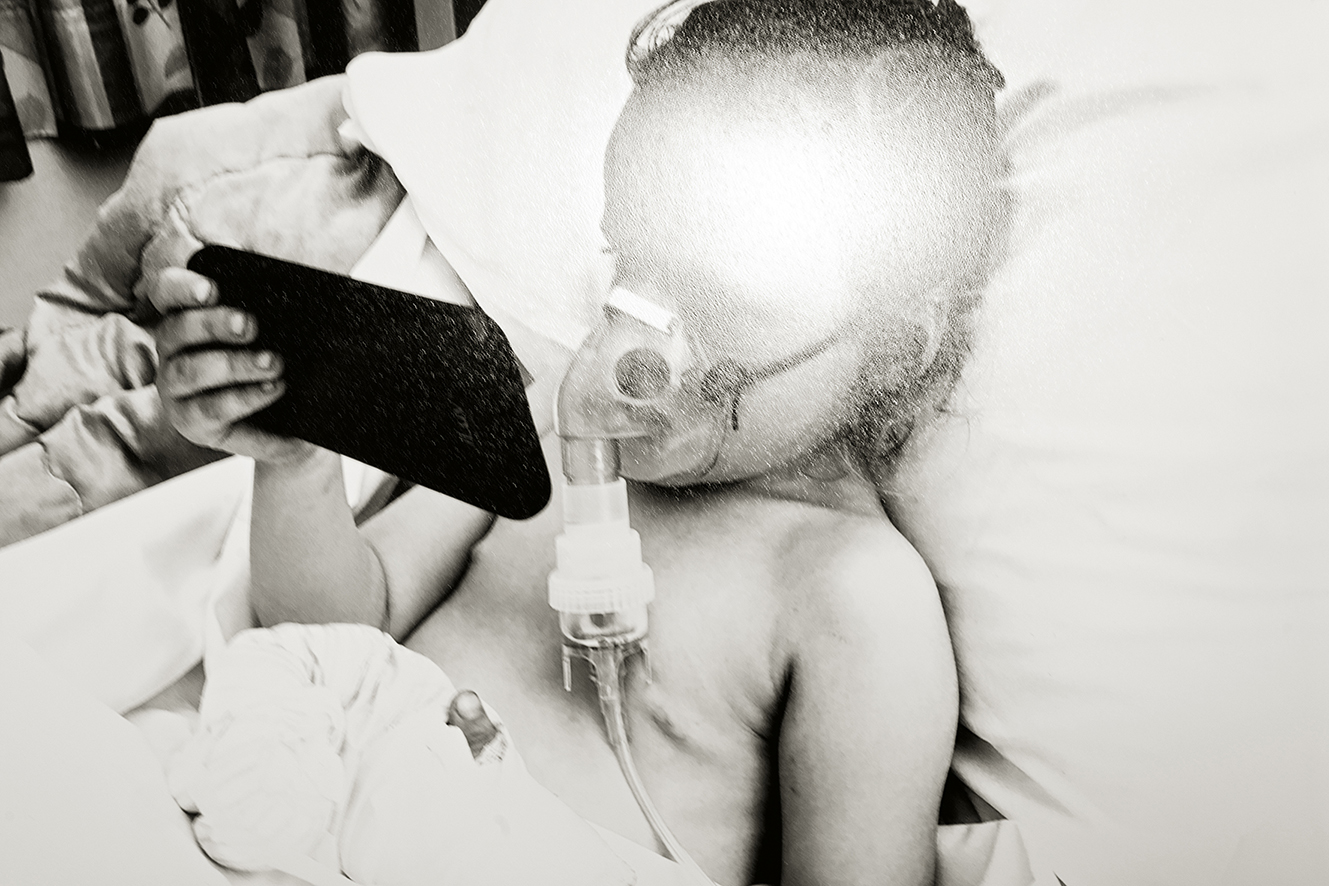
Katerina Angelopoulou (b. 1982, Athens) is an artist whose lens-based practice explores the tension between private memory and public record, grounded in two decades of work in performance design and dramaturgy across theatre, dance, opera, and film. Through long-term research into oral histories and archival material, she recovers silenced pasts, weaving them into elliptical, non-linear narratives that question institutional power and the construction of collective memory.
‘A large wildfire has a very distinctive sound. No one can tell you unless they have been in one. It is a sound that can haunt you…’
On 23 July 2018, one of the deadliest wildfires ever recorded swept through Mati and neighbouring areas, just 30 kilometres from Athens. Over a hundred lives were lost. Artist Katerina Angelopoulou survived the fire, fleeing with her mother and three-year-old daughter.
The Fumes of Mars is a counter-archive, a forensic and deeply personal investigation into how official narratives of catastrophe are constructed and enforced, and how governance failures and the climate crisis converge in collective trauma. It brings together photographs from the day of the event and the aftermath, survivor testimonies from public archives and the artist’s own, aerial maps, weather and aircraft reports, CCTV footage, and personal artefacts recovered from the ruins: jewellery, books, glasses. The work challenges the official narrative — one that persists — in which facts were concealed and victims held culpable.
Black-and-white photographs of interior and exterior landscapes, devoid of human presence, shot in the aftermath, convey a soot-permeated world. They give way to colour images taken on the day itself: entering a space of heightened reality. The personal artefacts — what one decides to save and what to leave behind in the face of having to abandon one’s home — are photographed as archaeological remains, fragments through which the story of a life can begin to be reconstructed.
Its structure is non-linear, mirroring how trauma fractures narrative, fragmentary, refusing easy resolution. Though rooted in a specific catastrophe, the work raises urgent questions: who controls the narrative of disaster and who is silenced in its aftermath. It speaks to something universal: the failure of institutions, the invisibility of survivors, and the struggle for accountability in an era of compounding climate catastrophe.
JO DUCK (Australia)
Razzle Dazzle: Hiding in Plain Sight
Vooninki
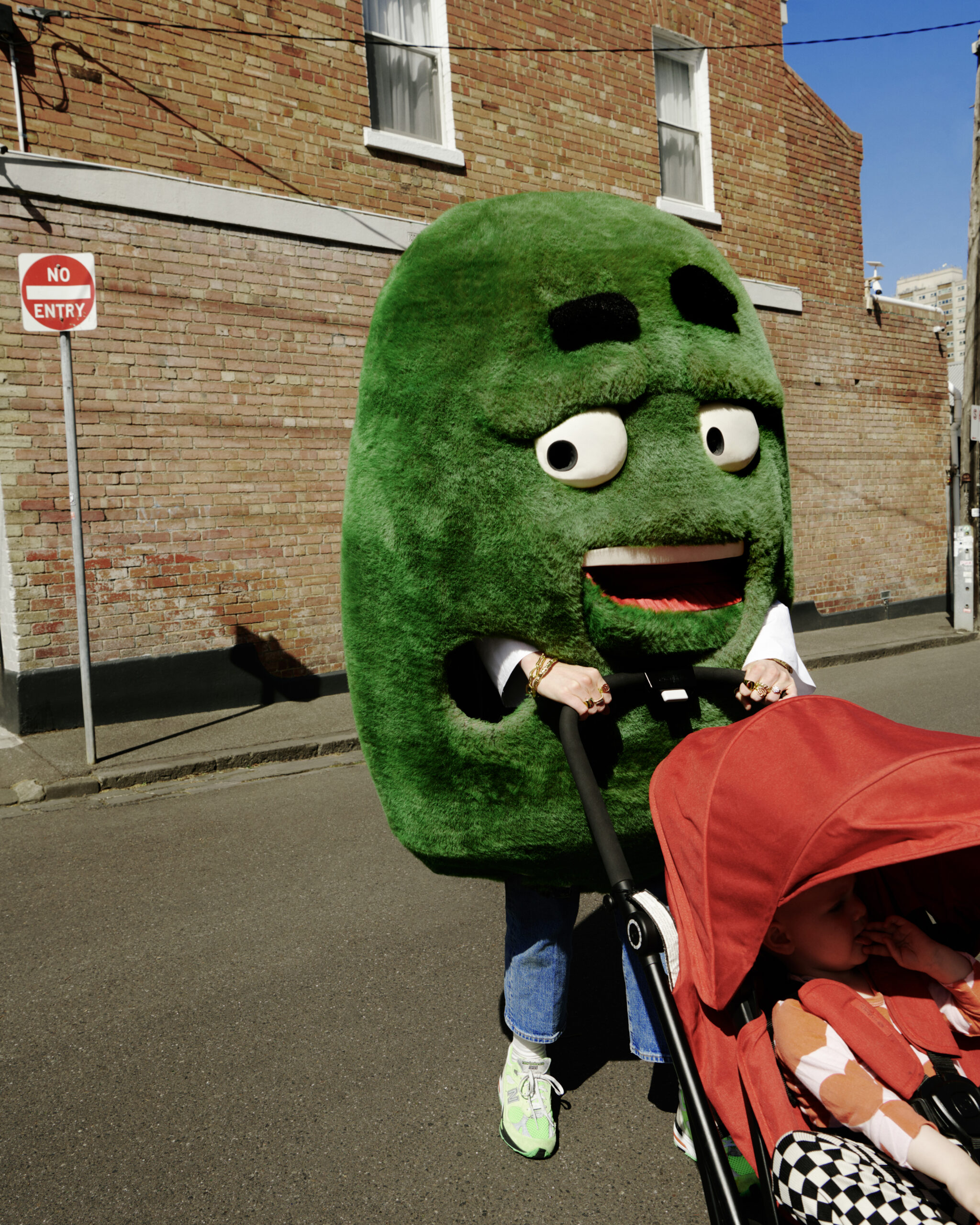
Driven by an appreciation for all things camp, joyful, and absurd, Jo Duck’s photography centres on crafting unique characters who live confidently in worlds of their own. Duck’s work radiates a humour that contributes to a distinctive style, one that is simultaneously strange and heartwarming.
In World War One, Allied Forces discovered that if you can’t hide, you might as well be ostentatious. They painted wild geometric patterns onto the hulls of their ships. Not to conceal them, but to make them unreadable. Enemy submarines could see the vessels but couldn’t judge their speed, direction, or location. The strategy was called Razzle Dazzle – hiding in plain sight by scrambling the information observers could extract.
Artist and researcher Adam Harvey explored a timely version of this with his 2010 project CV Dazzle, using hair and makeup to confuse facial recognition by inverting the face’s natural light and dark areas. His work proved early algorithms could be fooled through creative intervention.
Since then, the stakes have increased. During the 2019 Hong Kong protests, students used umbrellas and masks not just for protection, but to create visual barriers against technology used to identify demonstrators. In 2026, with mass protests continuing globally, ICE has implemented a facial recognition phone app federal courts have deemed too inaccurate for arrest warrants. Facial recognition is riddled with what Joy Buolamwini of the Algorithmic Justice League calls “the coded gaze”, racial, ableist, and gender profiling baked into the algorithms. Women of colour aged 18-30 are the least recognisable and most wrongly identified.
Worldwide, more people are urgently concerned with maintaining anonymity in public spaces. Razzle Dazzle is a series of photographic portraits of people trying, with varying degrees of success, to evade this technology through absurd, analogue methods. I’m interested in bringing Scooby-Doo hamminess to a genuinely frightening topic and find there’s something enjoyable about responding to absurd problems with absurd solutions.
Everywhere we go, we are recorded via dash cams, Ring doorbells, public transport and supermarkets armed with hundreds of cameras. We’re told this is for our safety, that it’s just how the modern world works. What we’re not told is what happens to our biometric data once collected, who has access, how long it’s stored, or what it might be used for in an uncertain future.
Try to opt out and you’re pushed to the fringes and labeled a conspiracy theorist, unable to travel, shop or move through the world freely. Choice has been taken away. My characters are attempting, often poorly and absurdly, to take some back. Through comical disguise and deceit, Razzle Dazzle offers deeply human responses to our changing world. My subjects use whipped cream pie crusts, venetian blind costumes, portable waterfalls, bandages and streamers , all completely analogue methods acknowledging their own futility.
DAVID ELLINGSEN (Canada)
Days of Plenty: An Archive of Abundance Various, 2025
Vooninki
David Ellingsen is a Canadian photo-based artist working through long-term projects focusing on forests, biodiversity and climate. His work draws upon a colonial family history, one often embedded within British Columbia’s troubled forest industry, and reflects on the impacts of resource extraction and consumption on past, present, and future eco-systems.
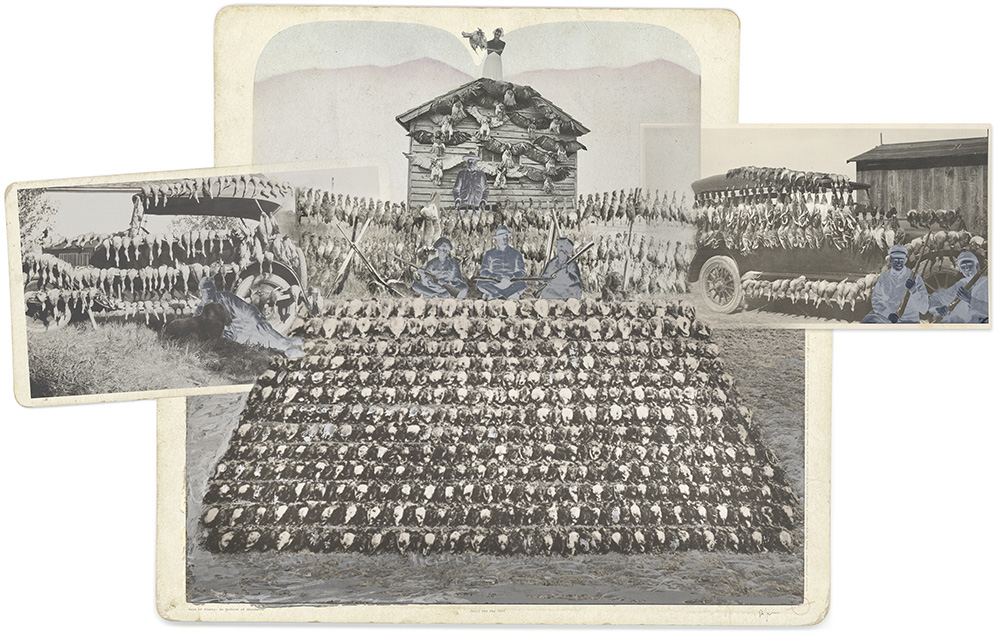
Through historical reinterpretation…a counter history…Days of Plenty speaks to biodiversity loss, ecological grief, and the Rights of Nature through photographic history and archives.
Most assessments of wildlife populations use 1970 as their starting point. With vast populations already extinct by that time – including the passenger pigeon, great auk, aurochs, and very nearly the plains bison – it is difficult today to imagine how the wild world may have looked before humanity’s Great Acceleration. Generationally shifting baselines have obscured our understandings of the Earth’s capacity for abundance.
But we do have history’s photographs to remind us…frozen moments granting us glimmers of now almost unimaginable natural abundance, artifacts recalling forgotten responsibilities.
GANSLMEIER&ZIBELNIK (Slovenia / Germany / Netherlands)
Bereitschaft | How TikTok became obsessed with a fascist statue, 2025
Vooninki
Ganslmeier & Zibelnik (b. 1990, Munich, and 1995, Ljubljana) are an artist duo working with photography and video, focusing on youth identity formation, particularly the influence of radical ideologies on young people. Their practice seeks to dismantle the visual language of radical ideologies and investigates how visual art can counteract radical political narratives while fostering sensitivity toward social issues shaped by conflicting perspectives.
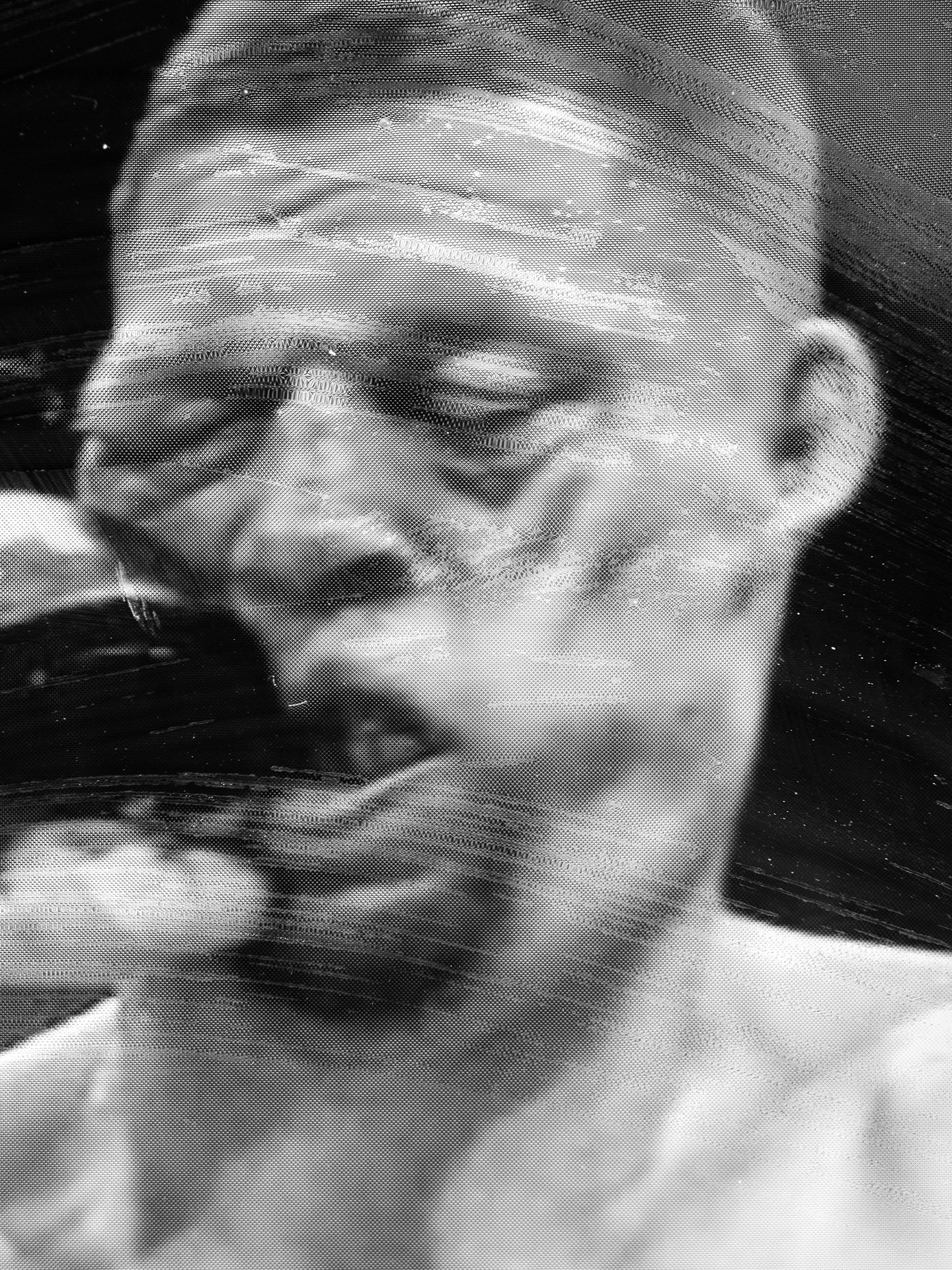
Bereitschaft is an ongoing photograpy and video-based project by the artist duo Ganslmeier & Zibelnik that examines how far-right ideologies are normalised and disseminated through the mainstream visual language of social media.
In 1939, German sculptor Arno Breker (1900-1991) crafted a statue titled Bereitschaft, portraying a male, nude warrior drawing a sword, symbolizing preparedness for the impending call to arms faced by the German people. In 2023, this sculpture became an obsession on TikTok. Through their video work and accompanying photography series, the artists delve into the glorification of the ‘sculpted’ male physique and the advocacy of self-discipline within TikTok fitness trends, examining how these inclinations mirror fascist tendencies and serve as symptoms of a right-wing ideological shift.
JOEL JIMENEZ JARA (Costa Rica / Spain)
GLIMMERS, FEATHERS AND STARING SKIES, 2025-2026
Valokuvakeskus Nykyaika
Joel Jimenez (b. 1993, Costa Rica) is an artist and filmmaker based in Madrid, Spain. Working across photography, installation, and moving image, his practice examines the politics of memory and the ways power and ideology are inscribed in space. Through research-based projects, he explores landscapes, architectures, and archives as carriers of shared histories, engaging with themes of erasure, displacement, and the instability of historical narratives. His work often moves between documentation and speculation, bringing together archival materials, environmental observation, and mythological references, with a growing focus on non-human forms of memory and communication.
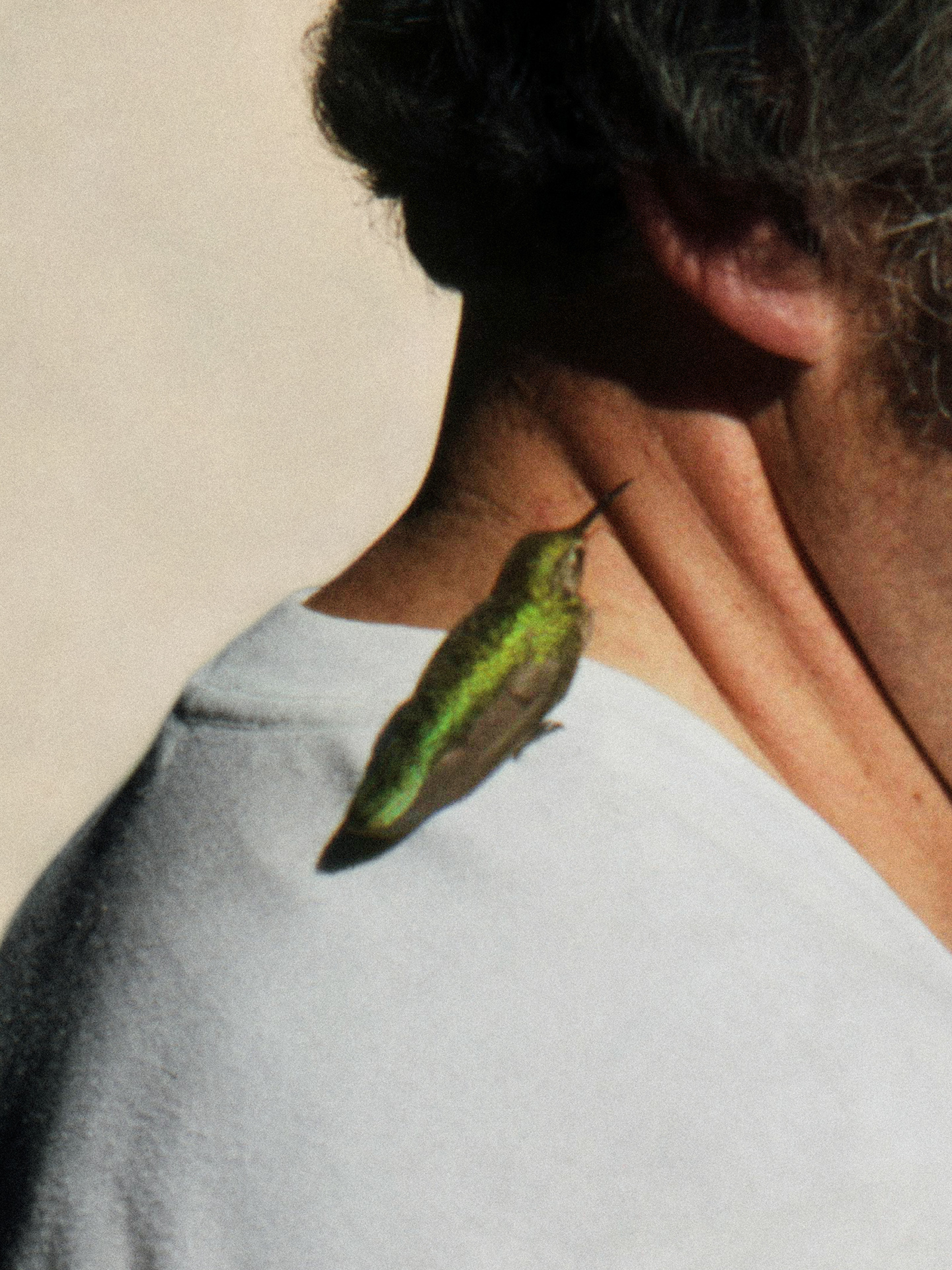
Hummingbirds are the only birds capable of flying backwards; their suspended motion mirrors the process of grief, moving into the past while still held in the present. A few years ago, I left my home country, Costa Rica, finding my own migratory route across the ocean. During that time, my father passed away from a neurodegenerative disease that slowly took his movement and his voice.
When he was well, my father spent his days tending to the flowers in our garden and caring for a hummingbird that visited the red feeder he placed. After his death, my mother told me that the hummingbird continued appearing whenever she walked through the garden.
She explained that, in Costa Rican folk belief, hummingbirds carry the souls of the dead and return to greet those they love; a belief handed down through generations and influenced by the cosmology of the Boruca, an Indigenous community in Costa Rica whose spiritual traditions are entwined with the natural world.
Glimmers, feathers and staring skies explores the hummingbird as a migratory body that transgresses dominant knowledge systems, moving between science and myth, between the earthly and the celestial. Engaging with personal archives alongside colonial and ornithological materials, the project interrogates how photography has attempted to capture, verify, and classify a fleeting body.
In an age of ecological fragility, the project considers how we attend to and relate to more-than-human others. Conceived as a practice of care shaped through interspecies relationships, it opens alternative ways of experiencing grief and memory. In doing so, it becomes a means to reconnect with my father, reimagining his still body through the language of flight.
AKSHAY MAHAJAN (India)
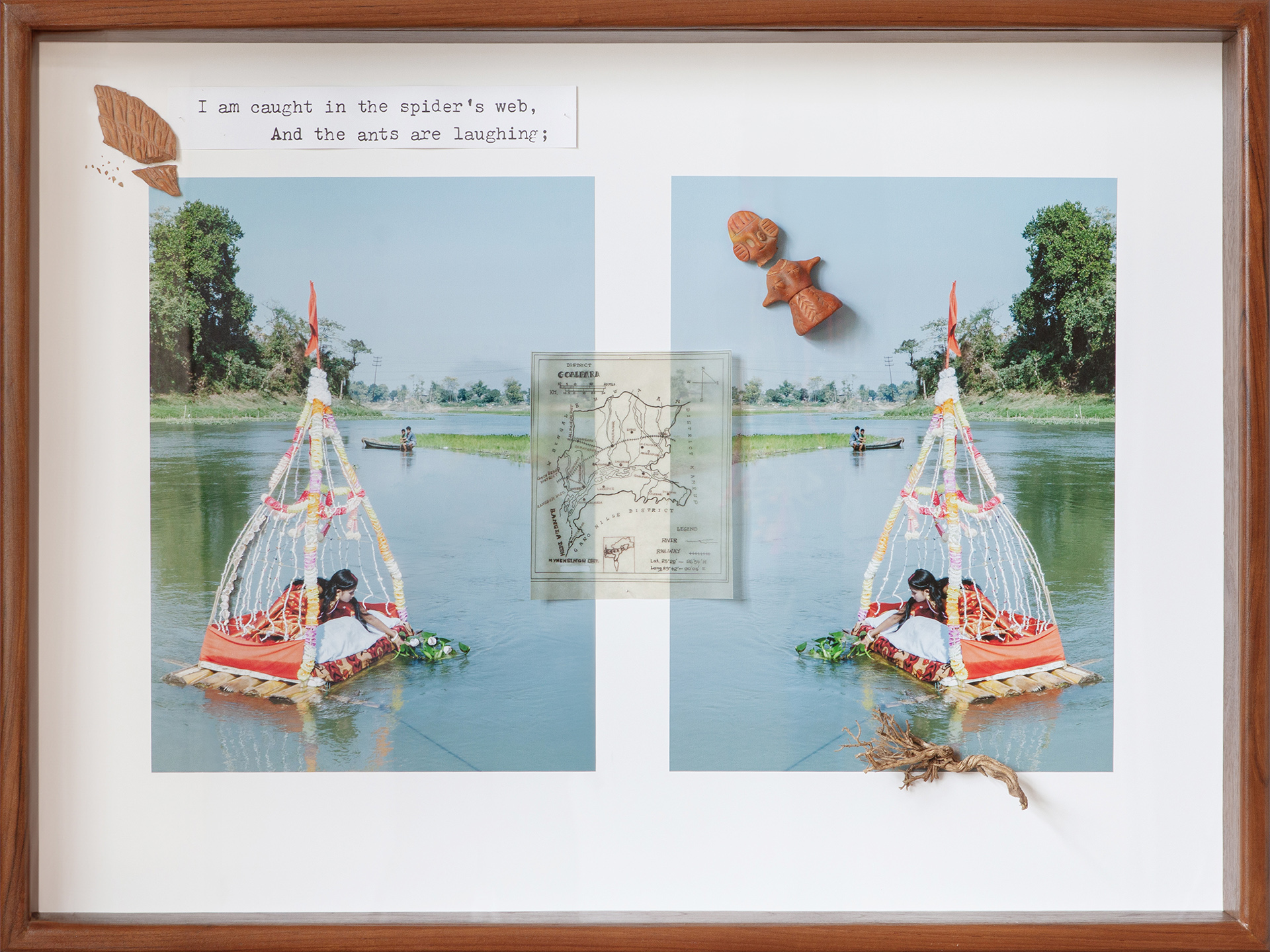
People of Clay
Vooninki
Akshay Mahajan (b. 1985, India) is an artist, photographer, writer, teacher, and curator based in Goa. His practice uses photography as a way to think through culture, collective memory, folklore, myth, and the afterlives of colonial histories. Moving between documentary, archival research, staged images, text, and installation, his work often examines how postcolonial realities remain haunted by precolonial memory, and how landscapes, cities, objects, and communities carry the traces of unresolved histories and failed futures.
It took me many years to notice that in quiet moments, when no one was listening, she would sing. Simple tunes, carrying haunting notes of melancholy. I would try to grasp the words of a language I did not yet know how to place — folksongs of a forgotten people.
Using these songs as a map, I began to sculpt a new, amorphous personal identity: one not inherited by birth, but through love. I travelled to her corner of India, a region bordering Bangladesh, inherited by me through marriage and bifurcated by the colonial borders of Assam and Bengal. The elision of this identity is visible in colonial documents. In The People of India, a nineteenth-century British ethnographic album compiled after the 1857 revolt, the caption beneath an elderly Rajbanshi man reads: “Rajbansi. Aboriginal. Now Hindoos.” The description is both pejorative and inaccurate, since the Rajbanshis were never entirely Hindu. Their folk culture, language, songs, and traditions were slowly pushed into obscurity, absorbed into larger regional and religious identities.
People of Clay attempts to pick at the remnants of this folk psychogeography as though following a folktale already beginning to unravel. Presented as an assemblage of photographs, archival material, text, lyrics, and terracotta forms, the work moves between documentary evidence and myth, between what is remembered, misnamed, sung, and forgotten.
The work is also a reminder that we are all people of clay: shaped, broken, remade, and never entirely chained to the borders we inherit. Like me, one may sometimes find identity not through blood or land, but through love.
ANDRE RAMOS-WOODARD (USA)
BLACK SNAFU
Vooninki
Raised in the Southern states of Tennessee and Texas, André Ramos-Woodard (he/ they) is a photo-based, mixed-media artist who uses their work to emphasize the experiences of marginalized communities while accenting the repercussions of contemporary and historical discrimination. By combing photography with illustration, text, and digital manipulation, his art conveys ideas of communal and personal identity, influenced by their direct experience with life as a queer African American. Focusing on Black liberation, queer justice, and the reality of mental health, he aspires for his art to help bring Power to the People.
Anti-Blackness seems inescapably mixed into whatever context I place it into; literature, science, government, health, art… look into any “field” and see for yourself. My people have had to cry, scream, and fight for respect for centuries, and we still have not gained what we deserve. To move past the damage this has done to our society, we can’t simply deny our history—we must recognize it. We must acknowledge the many ways in which this country has perpetuated a racial hierarchy since these lands were first colonized and stripped from indigenous peoples, and Black people were stolen from their native land and brought to America.
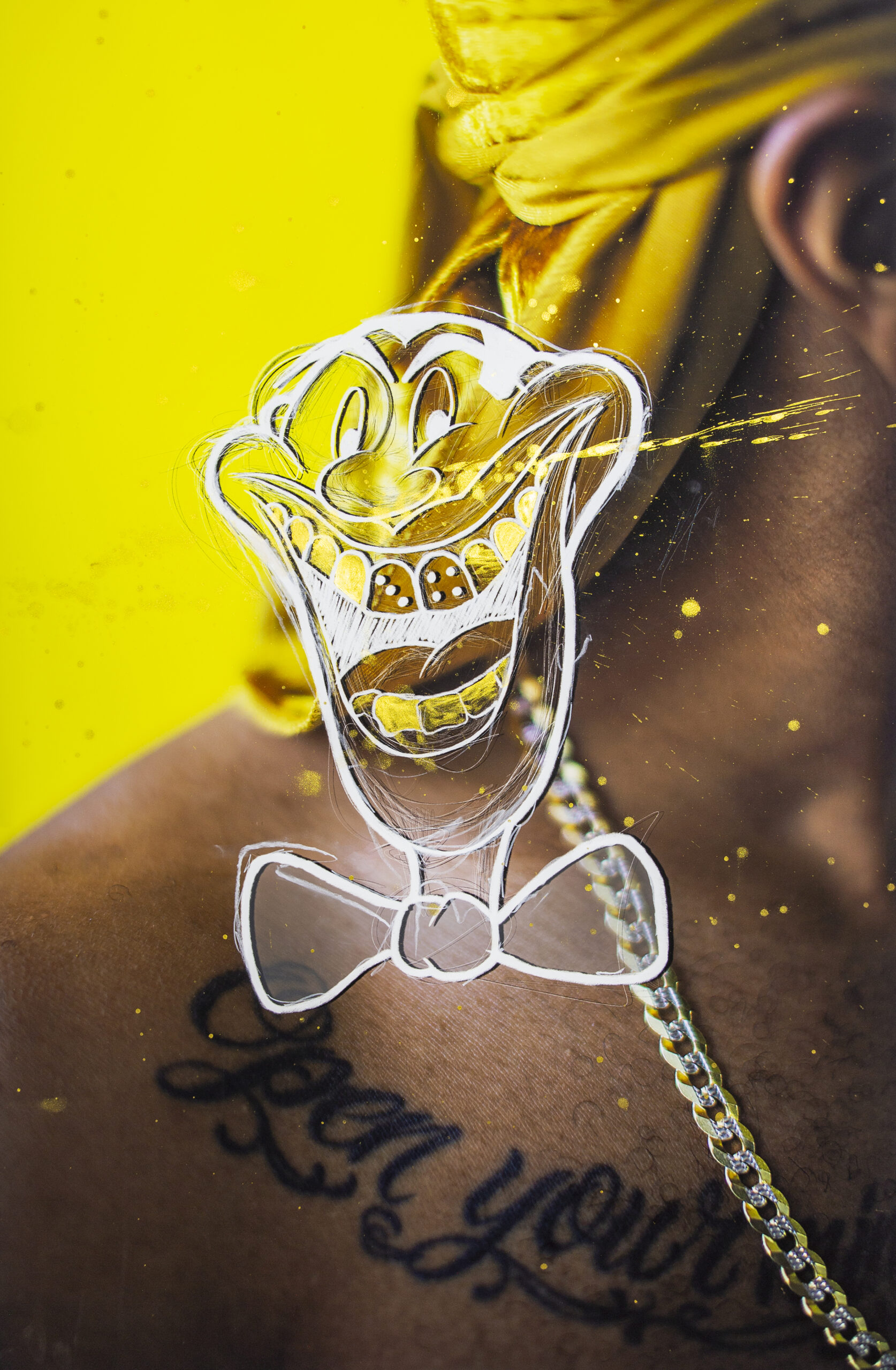
In Black Snafu (Situation Niggas: All Fucked Up), I appropriate various depictions of Black people that I find throughout the history of cartooning and juxtapose them with photographs that celebrate and line up more authentically with my Black experience. The photographs I create vary in subject matter; I seek to include celebratory portraits, didactic still lives, and representational documentations of places rich in their relation to Black community, allowing me to fight back against the history of the racist caricature that I reclaim in my work. By combining these ambivalent visual languages, I intend to expose to viewers America’s deplorable connection to anti-Black tropes through pop culture while simultaneously celebrating the reality of what it means to be Black.
RAFAEL RONCATO (Brazil / Netherlands)
Tropical Trauma Misery Tour, 2018-2023
Vooninki
Rafael Roncato (b. 1989, Brazil) is an interdisciplinary visual artist, editor, and educator working between Brazil and the Netherlands. His practice examines colonial memory, media myths, and the politics of representation, focusing on how images construct belief systems and shape collective perception. Grounded in documentary photography and expanded through archival research, video, and editorial strategies, Roncato develops semi-fictional, non-linear narratives that interrogate contemporary media landscapes and historical power structures. Inspired by comics, cinema, and Brazilian (post)modernism, his work moves fluidly across formats, from artist books to exhibitions and multimedia projects.
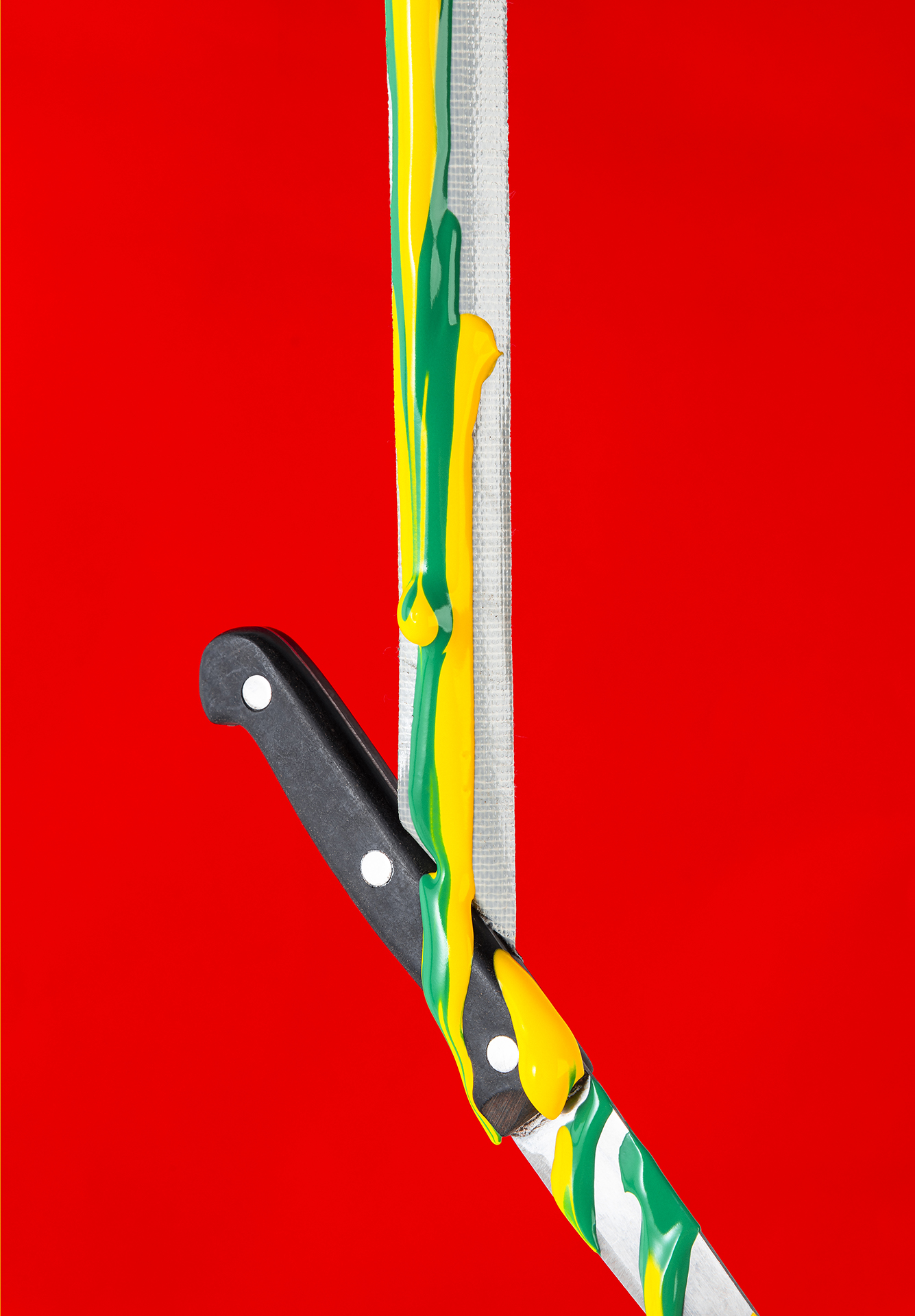
Tropical Trauma Misery Tour is a speculative documentary photography project that unpacks the farcical spectacle and digital chaos of Brazil’s far-right populist rise, while interrogating the global strategies of misinformation, martyrdom, and narrative manipulation that define contemporary politics.
Taking the 2018 stabbing of Brazilian presidential candidate Jair Bolsonaro as a catalyst, the work traces how a single event was amplified through social media into a foundational myth. Bolsonaro’s self-staging as victim-turned-saviour opened the floodgates for an unprecedented wave of networked propaganda, where falsehoods, memes, and doctored images were used not just to convince, but to confuse, destabilise, and dominate. At its core, this project is a visual investigation into the weaponisation of media and contemporary political mythmaking.
Through staged imagery, appropriated material, archival fragments, and meta-fictional strategies, Tropical Trauma Misery Tour builds a three-act theatre of political farce. It reflects on how digital populism blurs the lines between fact and fiction, individual and collective authorship, emotion and evidence. While rooted in the Brazilian context, the project resonates with broader European and global realities: the manipulation of truth in wartime narratives, the emotional spectacle of strongmen politics, and the urgent need for media literacy in the age of algorithmic persuasion.
What happened in Brazil did not stay in Brazil. The tactics of confusion, the elevation of political figures into untouchable martyrs, the saturation of digital space with falsehoods masked as truth—these have travelled fast and far. From the disinformation trenches of Gaza to the echo chambers of the American alt-right, from manipulated media in Eastern Europe to AI-generated propaganda seeping into everyday feeds, the chaos strategy is now transnational. In this moment, where images no longer simply represent but actively shape our political and emotional realities, Tropical Trauma Misery Tour calls for critical seeing and for an urgency to read between the layers of performance, emotion, and digital distortion.
Rafael Roncato proposes a visual practice that doesn’t just reflect the world back to us, but invites us to decode it. To recognise how illusion becomes infrastructure. To ask: What does it mean to witness? To believe? To resist? And perhaps most importantly—how do we keep our eyes open when truth is constantly rewritten before our eyes?
SASHA VELICHKO (Belarus / Poland)
State of Denial
Vooninki
Sasha Velichko (b. 1993, Slonim, Belarus) is a research-based artist whose practice spans photography, installation and new media. Her work investigates propaganda, post-truth, manipulations, collective and individual trauma. With a master degree in radiophysics she integrates scientific thinking into her artistic practice. After being politically convicted and persecuted in Belarus and forced to flee, she relocated to Warsaw.
I’m a political exile from Belarus. In my homeland, a repressive dictatorship prevails, suppressing freedom of expression. The government-controlled media conceals information regarding the increasing count of political detainees, the alarming rate of disappearances, and the ineffectiveness of laws and the constitution in safeguarding the rights of individuals.
In my project, I explore the phenomenon of digital everyday life through the interaction between human and media channels. Contemporary society, which is filled with countless distractions vying for our attention has become commonplace to avert our gaze from images that evoke discomfort.
The body of work is divided in two parts. The first part contains selection of absolutely absurd and scary stories of detentions from Belarus. I researched them and created staged photographs based on those stories. In a country ruled by a dictatorship, people are put in jail for speaking Belarusian language, praying, carrying flowers, wearing white-red-white clothes — the colors of our historical flag, now labeled extremist.
In a second part, I use the news titles that came out on the specific date of these arrests. The neural network utilized the title of each news item as input to generate corresponding images. Numerous irrelevant and peculiar news articles emerged coinciding with the dates of arrests. For each case, I selected 12 headlines published on the day of the arrest—to show how, in moments of crisis, propaganda generates visual and informational noise.
I aim to demonstrate how the agenda seeks to redirect our focus away from the crucial issues. Additionally, I want to explore our tendency to evade problems of significance and instead occupy our minds with superfluous entertainment content.
TIMO WRIGHT (Finland / Japan)
Search and Destroy, 2026
Vooninki
Timo Wright is a media artist and filmmaker based in Helsinki, Finland and Tokyo, Japan. His artistic practice combines deeply personal topics with larger political and societal questions. His aim is to create works that look at the world not only through personal experience, but across the different forms of politics, society, customs, and memory. As an artist, he is interested in working across different platforms and formats, and in many works he has wanted to push technical boundaries.
What if we could see the world through the eyes of an algorithm?
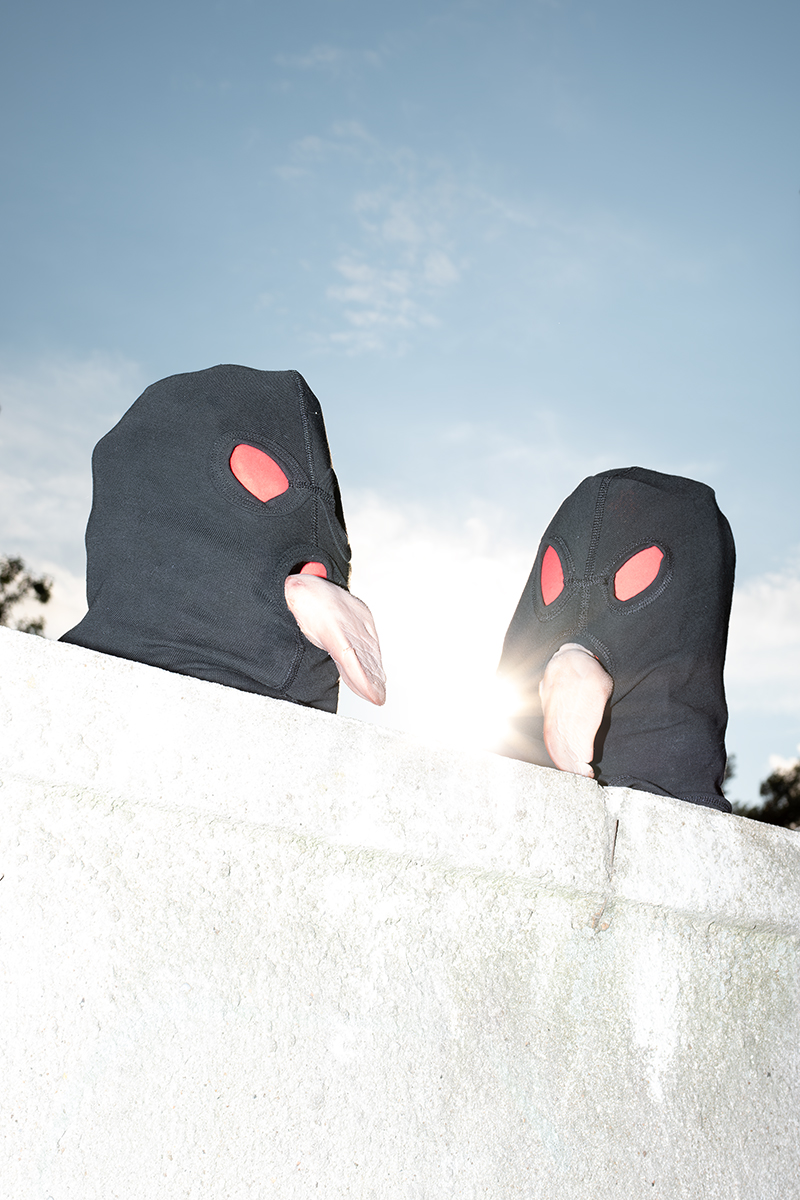
Search and Destroy is a series of works exploring how different algorithms perceive our visual world. The centrepiece is a video in which a custom-made algorithm analyses a short documentary, made specifically for this project, about public and private surveillance and gaze. The viewer never sees the original footage — only renditions of extracted information against a white background: tracked faces, bodies, camera movement, compression artefacts, objects, and more.
The work begins playfully — familiar, even lighthearted — before gradually revealing something more unsettling beneath the surface.
Mobile phone camera filters, self-driving cars, passport control machines and other everyday technologies make our lives easier, yet they share much of the same underlying technology as AI warfare systems and surveillance networks — tools of control hiding in plain sight.
The project comprises a single-channel experimental documentary, a series of prints, and a book.
SHEUNG YIU (Hong Kong/Finland)
The Ouroboros of Faces, 2025
Vooninki
Through the machinic eye, a facial recognition algorithm is looking. It claims to have the power to predict my sexuality from facial landmarks. Across Eastern and Western cultures, society has long developed ways to predict a person’s character through facial features. Today, the forgotten pseudo-science of physiognomy re-enters our lives through facial recognition algorithms, where societal biases and individual prejudices continue to perpetuate.
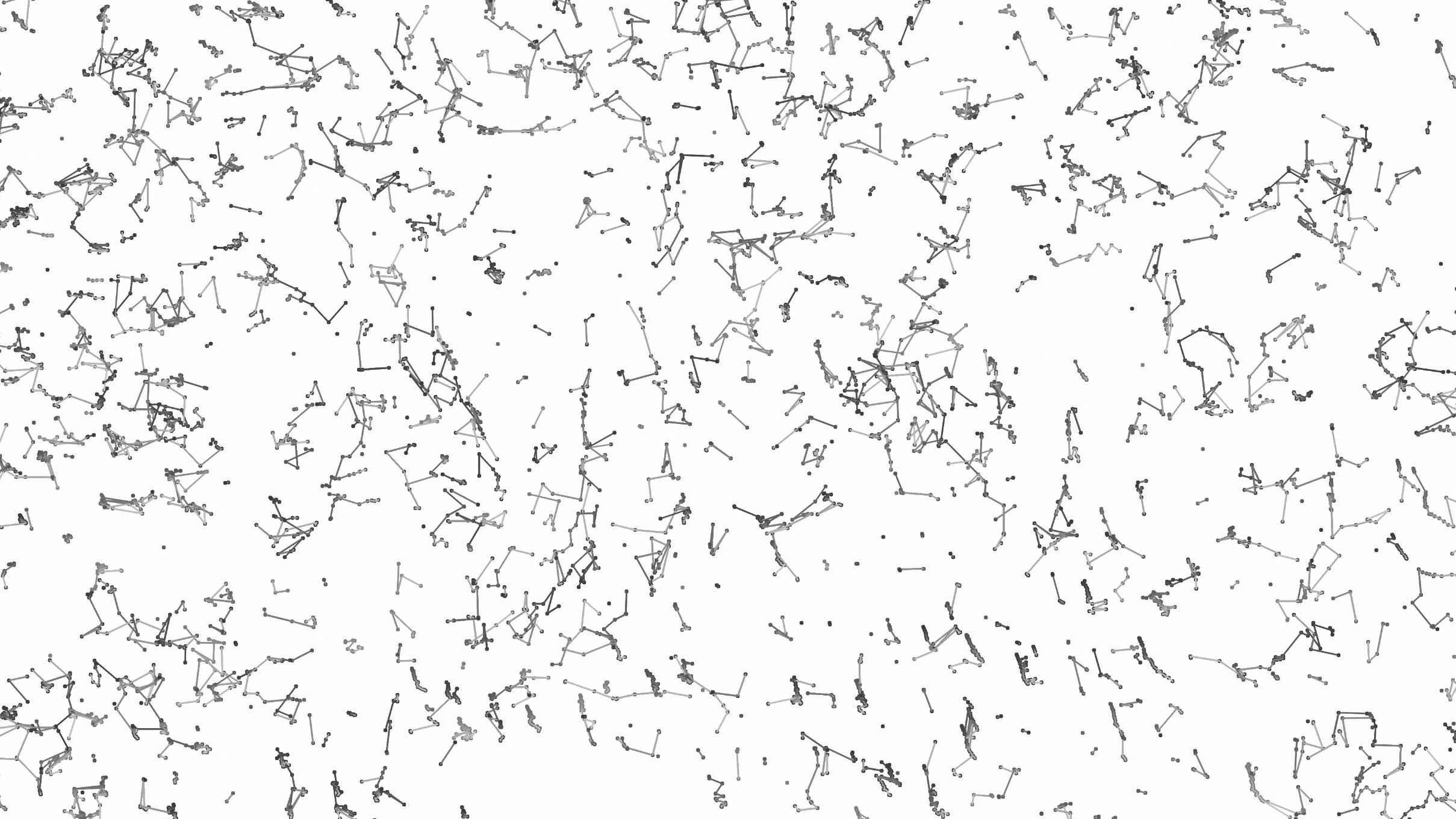
In The Ouroboros of Faces, I reset the framework of facial recognition by recontextualizing archival images and diagrams of face reading alongside contemporary datasets and algorithmic outputs. I put my own face through various predictive regimes – Western physiognomy, Chinese face reading, facial recognition, facial phenotyping, facial generation and synthetic facial data.
By placing the esoteric alongside the high-tech, the project reveals their shared logics, exposing how magical thinking is automated in machine vision. It asks whether facial recognition is a form of Western face reading – or whether face reading has become a form of facial recognition – and suggests that the true art of deception may lie in wrapping old beliefs in a shiny technological shell.
Sheung Yiu (b. 1991, Hong Kong) is an image-centred artist and doctoral researcher based in Helsinki. Working across photography, video, installation and artist books, his practice explores imaging technologies at the intersection of photography and large-scale computation, examining how photographs become predictions.
AMIN YOUSEFI (Iran/UK)
Defensive Readiness: Revised Edition, 2025
Vooninki
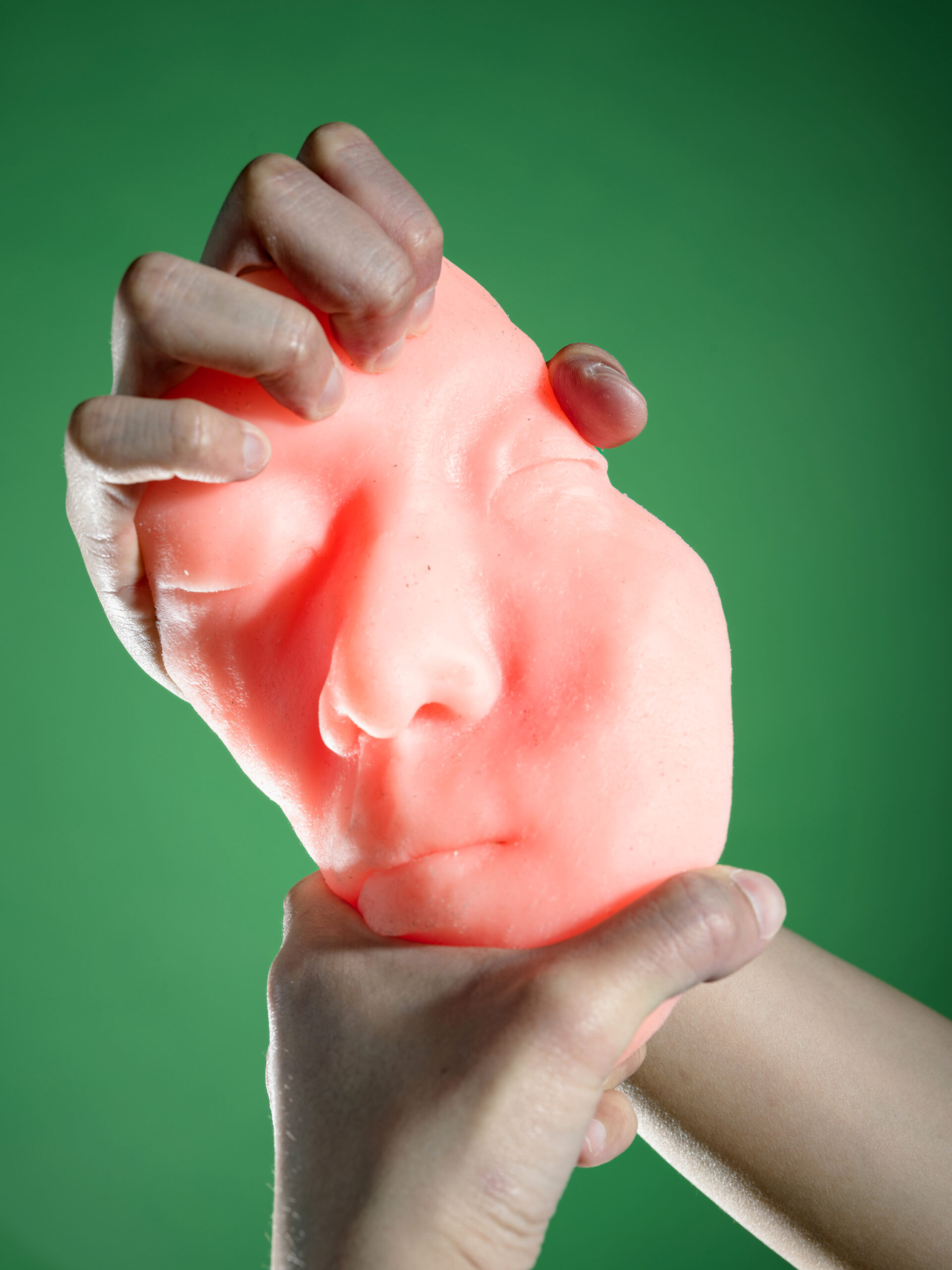
Defensive Readiness: Revised Edition examines the body as a political field shaped through institutional images and state pedagogy. Working with a state-issued military and civil defence textbook once distributed to Iranian high school students, the project explores how bodies are trained to become legible, obedient and operational.
The work intervenes in the textbook on two levels. Selected pages are reproduced and annotated with corrections, darkroom notes and handwritten markings, shifting the language of instruction into a clinical register and revealing how institutional power operates through procedures that resemble care. A second component reenacts poses from the manual through three-dimensional scans, exposing the gap between institutional representation and lived embodiment.
Working across photography, annotation and reconstruction, Defensive Readiness: Revised Edition reflects on how institutions script bodies and how lens-based media can reveal the mechanisms that produce compliance. The project asks what it means to question, refuse and re-inhabit images designed to instruct.
Amin Yousefi (b. 1996, Iran) is a London-based writer, curator and image-based artist. Working across photography, text and installation, his practice examines the social and political dimensions of photography, with a particular focus on archives, state-produced images and the ways visual culture shapes power, memory and perception.
Backlight 2023
FIONA AMUNDSEN
An Ordinary Life, 2021
Tampereen Taidemuseo 17.6.-15.10.2023
Fiona Amundsenin (s. 1973, Aotearoa-Uusi-Seelanti) työ tutkii dokumentatiivisten valo- ja filmikuvien tapoja luoda kytkeytynyt, aktiivinen ja välittävä suhde nykyhetkessä eläviin menneiden tapahtumien kivuliaisiin seurauksiin. Hän tahtoo luoda suhteita tiettyjen historiallisten tapahtumien, todistamisen sosiaalisen vastuun, ja dokumentatiivisen valo- ja filmikuvauksen välille. Hän editoi julkisiksi tehtyjä armeijan tuottamia arkistokuvia yhteen omien nykypäivänä otettujen valokuvien ja filmiensä kanssa, ja tutkii näin kuvamateriaalin mahdollisuuksia toimia visuaalisena kuuntelun muotona ja todistaa dokumentatiivisesti kolonialistista ja imperialistista väkivaltaa, oli se historiallista tai ei.
An Ordinary Life tutkii Yhdysvaltojen vuonna 1945 toteuttamaa Japanin atomipommitusta. Tämän tarinan kertoakseen taiteilija Fiona Amundsen on tehnyt yhteistyötä Kanariya Eishin, Aotearoalla elävän rokugo-esiintyjän kanssa, jonka perhe on Nagasakista. Käyttäen rokugolle tyypillisiä kerrontatapoja Eishi muistelee pommien aiheuttamaa tuhoa puhuen isoisänsä kummituksen kanssa, joka oli sotilas pommituksen aikaan.
Fiona Amundsen on taiteen teorian ja historian sekä valokuvauksen dosentti Uuden-Seelannin Yliopistossa Aucklandissa. Kanariya Eishi (s. 1976, Japani) on japanilainen rokugo-esiintyjä ja näyttelijä joka toimii Aotearoa-Uusi-Seelannissa.
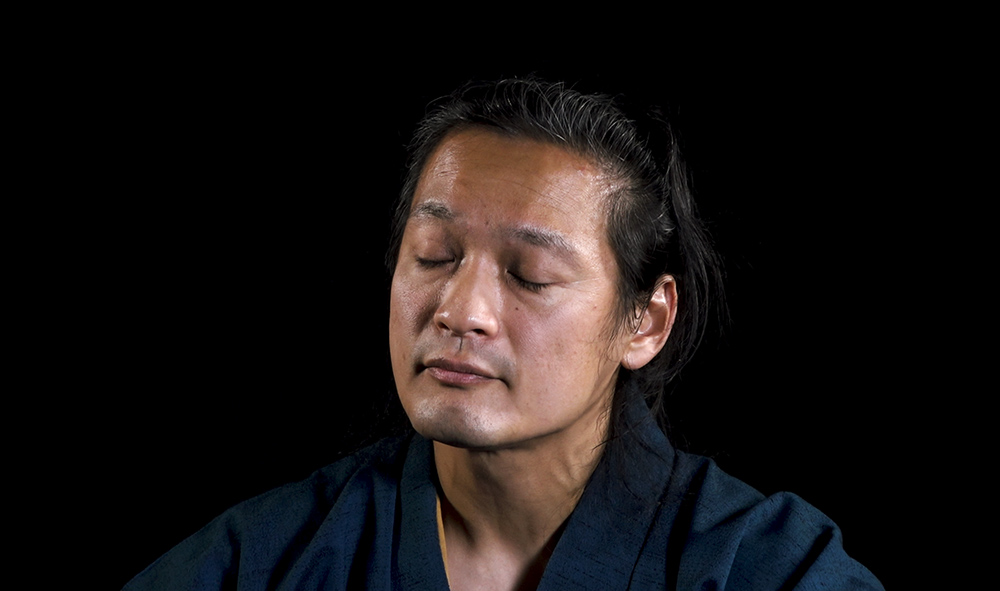
SOLMAZ DARYANI
The Eyes of Earth, 2014-22
Tampereen Taidemuseo 17.6.-15.10.2023
Solmaz Daryani (s. 1985, Iran) on dokumentatiivinen valokuvaaja joka toimii vaihtelevasti Iranissa ja Iso-Britanniassa. Hänen työlleen tyypillistä on ilmastonmuutoksen ja vesikriisien tutkiminen, keskittyen ihmisiin ja heidän suhteisiinsa ilmaston, yhteisöjen ja kulttuurien kanssa. Uransa alusta alkaen hän on luonut useita päiväkirjamaisia töitä pitkillä aikaväleillä ymmärtääkseen ihmiskäytöstä ja -ajatuksia niiden sosiaalisissa, kulttuurisissa, uskonnollisissa ja poliittisissa konteksteissa.
Hänen käynnissä oleva projektinsa, The Eyes of Earth, on erittäin henkilökohtainen tarina Luoteis-Iranissa sijaitsevan Urmiajärven ympäristökatastrofista. Joitain vuosikymmeniä sitten suositusta lomakohteesta on viimeisen kahdenkymmenen vuoden aikana kuivunut noin 80 prosenttia.
Solmaz Daryani valmistui Azadin yliopistosta tietojenkäsittelytieteen tutkinnon kanssa vuonna 2011. Hän jatkoi opintojaan Tanskan media- ja journalismiopistossa (DMJX) vuonna 2020. Hän alkoi tutustua valokuvaukseen itseoppineena valokuvaajana vuonna 2012 opiskeltuaan itsenäisesti elokuvataidetta.
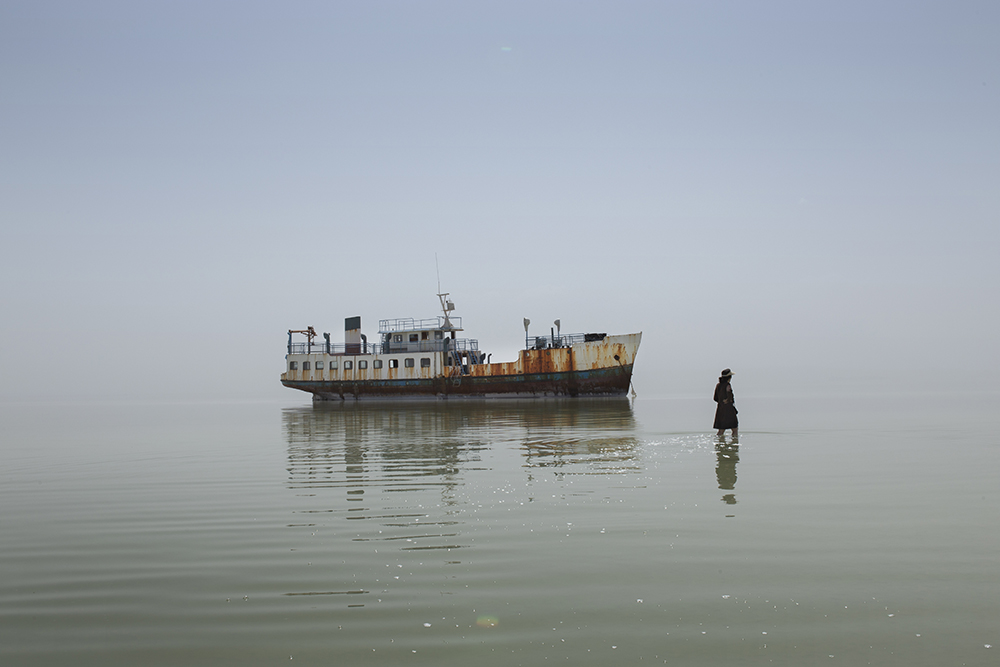
VELI GRANÖ
Väärä Profeetta
Galleria Koppelo 3.6.-2.7.2023
Näyttely Väärä Profeetta, kuten monet Veli Granön edelliset näyttelyt, tutkii todellisuuden moniluontoisuutta. Se on tietynlainen visuaalisnarratiivinen essee. Monet näyttelyn osat viittaavat vuosia sitten olleeseen aikaan. Tarinan vanhimmat osat voidaan löytää perintökirjaston sivuilta kuvasarjassa Uni on.
Näyttelyn jokainen kuva ja esine on osa sen pirstaloitunutta narratiivia. Traktorinrengas yrittää yhdistää polkuja. Se kertoo jatkuvuudesta - ehkä myös maanviljelystä - mutta Harvesting Moments on myös metafora elämälle ja valokuvaukselle.
Täysimittainen sota on taas saapunut Eurooppaan. Olemme uskoneet vääriin profeettoihin ja täten joudumme taas kohtaamaan ihmiskunnan kamalimmat kysymykset - kysymykset joiden luulimme jo jääneen historiaan. Ehkä historia ja meitä ennen eläneet puhuvat nyt meidän suillamme. He ohjaavat käsiämme ja tahtojamme, vaikkemme toivoisi sitä. Mistä paha tuli - ja onko se täälläkin?
Videotyö Neighbors Grannar osoittaa ohikulkijaan. Onko viattomuutta olemassa?
Pieni, viaton lapsi yrittää, kuvassa nimeltä The Face I Showed, nähdä samean perintöpeilin sisään. Lapsi tahtoo ymmärtää todellisuuden luonteen - missä on raja meidän tiedollemme ja ymmärryksellemme?
Voiko "profeetta" näyttää meille vaihtoehtoisen tien, polun pois itsetuhoisesta kulttuurista?
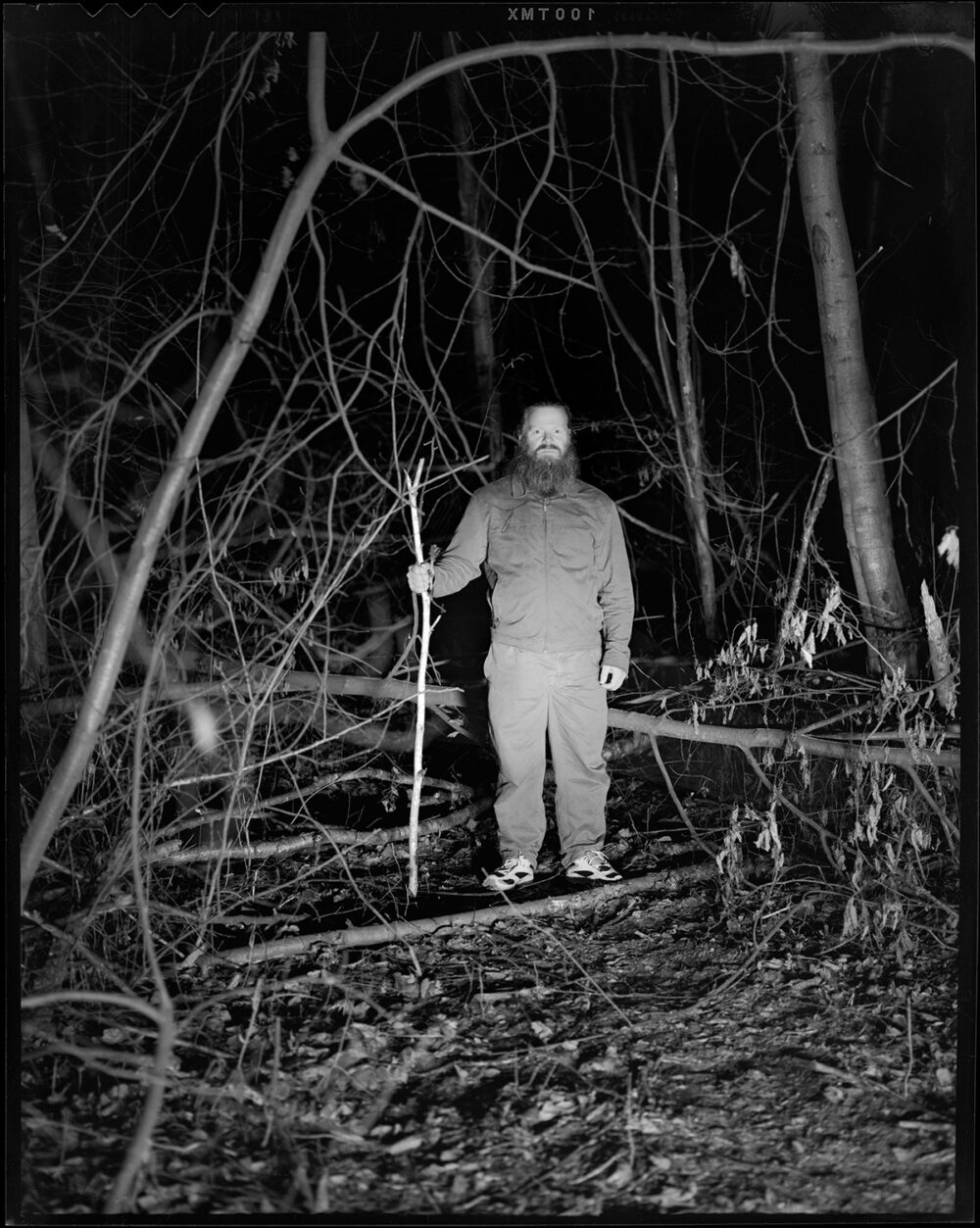
HNV COLLECTIVE
Atomic, 2020
Galleria Saskia 3.6.-2.7.2023
Atomic kertoo erään tietyn korun tarinan. Pieni, atominmuotoinen hiuskoriste suunniteltiin mittatilaustyönä Yhdysvaltojen armeijan pyynnöstä. Se tehtiin kullasta, palladiumista ja trinitiitti-nimisestä materiaalaista - New Mexicossa heinäkuussa 1945 suoritetun ensimmäisen ydintestin, Trinityn, sivutuotteena luodusta aineesta. Noin kuukausi tämän jälkeen Yhdysvallat pudottivat kaksi atomipommia Japaniin.
Tämä koristeellinen esine edustaa täydellisen väkivallan yhdistymistä kauniiseen muotoiluun ja kalleisiin, yleviin ja erityisiin materiaaleihin. Korua on käyttänyt Hollywood-tähdet ja seurapiirikaunottaret tanssiaisissa ja muissa tapahtumissa, ja toisen maailmansodan jälkeen Miss USA valokuvattiin tämä erittäin radioaktiivinen, erittäin vaarallinen koru yllään. Valokuvat levisivät ympäri maailmaa sanoma- ja aikakausilehdissä. Näyttely tutkii naiselliseksi kauneudeksi puetun propagandan eroa pommien todellisten seurausten kanssa. Koristeen ja sen historian kautta näyttely tutkii myös kauneutta, väkivaltaa, ja katsomisen voimaa.
Video on runollinen matka joka alkaa ja loppuu trinitiitin syntymäpaikassa: New Mexicon aavikossa jossa ydintesti repi atomeja kappaleiksi, pysäytti kaikki kellot ja aloitti uuden ajan ihmiskunnan historiassa. Trinitiitin luomishetki oli myös merkittävä tapahtuma inhimillisen ja epäinhimillisen historian suhteessa. Nopea ydinräjähdys on jättänyt pitkävaikutteisia radioaktiivisia vaikutuksia koko planeetan ekosysteemiin. Atomic tutkii näitä tapahtumia geologisella mittakaavalla sekä ajan että tilan kontekstissa esittämällä meille kuvia ihmistekojen vaikutuksista ja ympäristön sinnikkyydestä.
HNV Collectiven muodostaa kolme Helsingissä toimivaa taiteilijaa: Felicia Honkasalo, Akuliina Niemi ja Sinna Virtanen. Kollektiivi käyttää erilaisia mediamuotoja ja materiaaleja tutkiakseen taidetta, historiaa ja tiedettä yhdistäviä aiheita. Heidän tutkimuspohjainen työtapansa keskittyy historiallisiin kerrontatapoihin ja tieteellisten faktojen, myyttien ja mielikuvituksen vuorovaikutukseen.
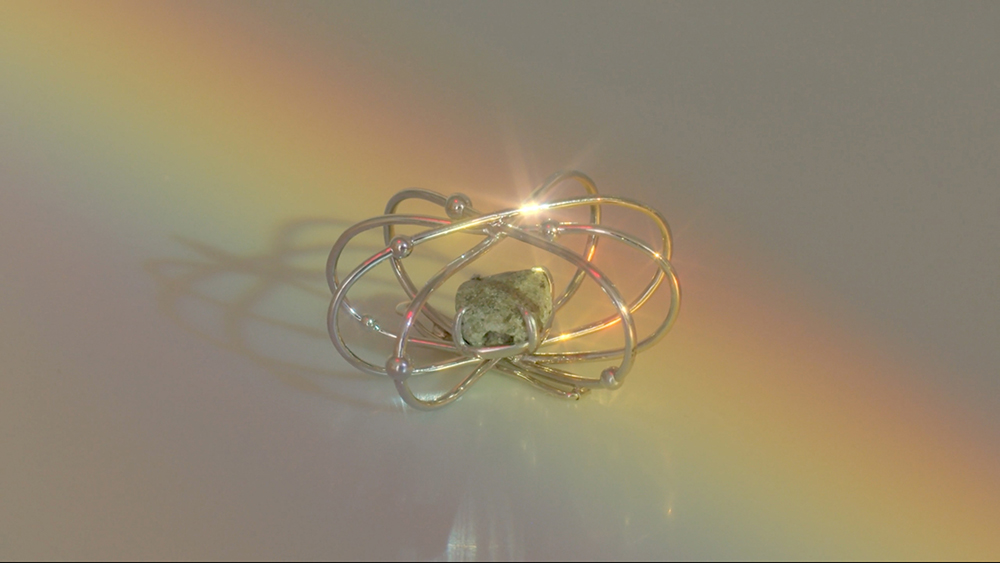
SUSANNE KRIEMANN
Pechblende (Prologue)
Pechblende (Chapter 1)
Valokuvakeskus Nykyaika 3.6.-31.7.2023
library for radioactive afterlife (uraninite cycle)
Arkistomateriaaleja, valokuvadokumentteja, kirjallisuutta ja löydettyjä esineitä yhdistävä Pechblende tutkii mittakaavojen, läheisyyden ja etäisyyksien ilmiöitä suhteessa radioaktiivisuuteen ja kehoon. Pechblende (saksankielinen sana uraniniitille) -mineraaliin keskittyvä hanke jäljittää tieteellisten ja valokuvallisten prosessien historiaa laboratoriotyön, arkistoinnin, museotyön ja kaivaustoimien toisiinsa liittävien paikkojen kautta. Erittäin radioaktiivista ja uraanirikasta uraniniittiä louhittiin itsepintaisesti entisen Saksan demokraattisen tasavallan "Malmivuoristossa" vuosina 1946-1989, mikä lopulta kiihdytti ydinaseiden kehittämistä Neuvostoliitossa. Kaivosten myrkyllisyydestä ja kaivoksissa toimineiden työntekijöiden kohtaamista terveysuhista huolimatta Malmivuorten maisema on nyt muuttumassa rauhalliseksi vuoristomaisemaksi, jossa on vain vähän tunnistettavia jälkiä edelleen säteilevistä teollisuustyömaista.
Oltuaan jo pitkään huolissan radioaktiivisuuden kirjaimellisesta ja poliittisesta näkymättömyydestä, Kriemann päätti työskennellä tutkijoiden kanssa useissa museoissa ja arkistoissa Yhsyvalloissa tuottaakseen erilaisia versioita ainutlaatuisesta valokuvan lajista, autoradiografiasta, joka syntyy altistamalla valoherkkää paperia suoraan uraniniittinäytteille. Tämä kameraton valotus tuottaa indeksisen mutta erittäin abstraktin kuvan, jossa kummittelevat ikonisen ydinasepilven ja sen sokaisevan valon vaikutelmat.
Galleria Nykyajan katutasossa esillä olevassa Pechblende (Prologue) -sarjassa Kriemann käyttää analogisia valokuvausmenetelmiä, mukaan lukien autoradiografiaa, yhdistäen ne arkistomateriaaleihin. Tavoitteena on visualisoida sitä, mikä on näkymätöntä ja silti läsnä olevaa: radioaktiivisuutta.
Gallerian alakerrassa esillä oleva Pechblende (Chapter 1) -kokonaisuus sisältää joukon museoesineitä, kuten työkaluja, ketjuja ja vaatteita, jotka yhdessä viittaavat uraanin loihinnan myrkylliseen historiaan ja sen vaikutuksiin kaivostyöntekijän kehoon. Valaisemalla näitä esineitä käärteisen camera obscuran kautta Kriemann pohtii radioaktiivisuuden aikaperusteista näkyvyyttä ja pitkittyneitä altistusprosesseja.
Susanne Kriemann (b. 1972, Saksa) elää ja työskentelee Berliinissä. Hän on taiteellisen valokuvauksen professori Karlsruhen taide- ja muotoiluyliopistossa (2017-2023) ja yksi Berliinin ABA-taidehankkeen perustaja.
Kriemann tutkii valokuvauksen välinettä yhteiskuntahistorian ja arkistokäytäntöjen näkökulmista. Ajatellen valokuvaa perinteistä laajemmin, hän pohtii maailmaa analogisena "tallennusjärjestelmänä" ihmisen aiheuttamille prosesseille. Tämä on johtanut kysymyksiin radioaktiivisuudesta ja kaivostoiminnasta, arkeologiasta ja hitaasta väkivallasta. Kriemannin hankkeissa keskeistä on ekologiaan keskittyminen. Saastuneiden alueiden näkeminen laajoina valoherkkinä ryhminä on avain hänen ymmärrykseensä maisemasta. Hänen työskentelynsä poikkeuksellisia piirteitä on pigmenttien erottaminen tutkitusta aineesta ja niiden käyttö kuvien tuottamiseen.
NOELLE MASON
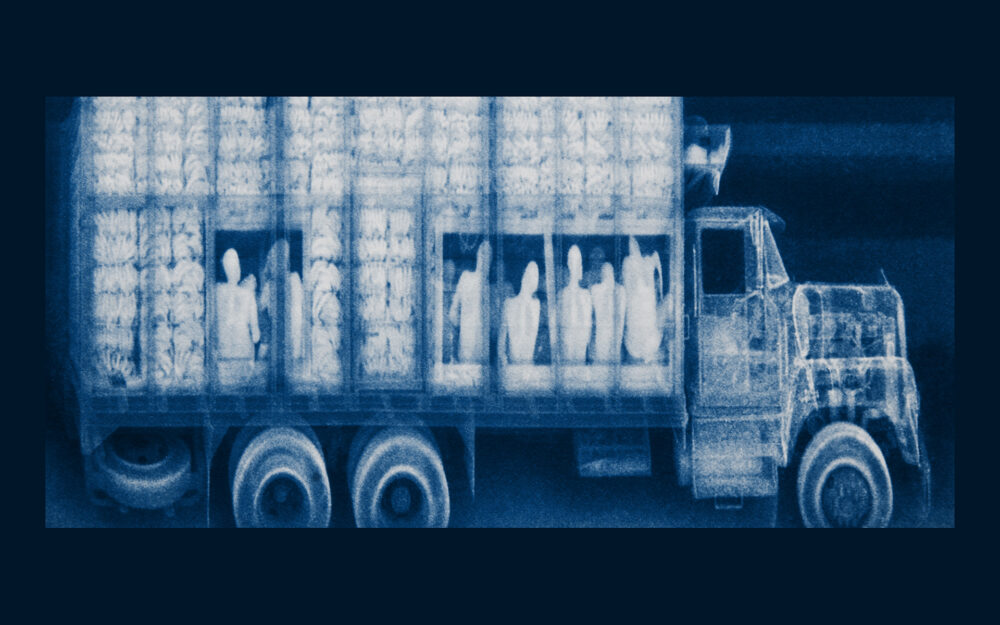
X-Ray Vision vs. Invisibility, 2020–21
Tampereen Taidemuseo 17.6.-15.10.2023
Noelle Mason (s. 1977, Yhdysvallat) on medioita yhdistävä taiteilija, jonka työ käsittelee valokuvien riittämättömyyttä kommunikoida tärkeitä koettuja tasoja jotka monimutkaistavat keskusteluja Amerikan kulttuurissa esiintyvistä traumaattisista tapahtumista. Mason on valmistunut taiteen maisteriksi Chicagon School of the Art Institutessa ja toimii tällä hetkellä kuvanveiston dosenttina Etelä-Floridan yliopistossa.
X-Ray Vision vs. Invisibility on työkokonaisuus, joka käsittelee miten näköteknologiat vaikuttavat fenomenologisesti dokumentoimattomiin maahanmuuttajiin suhtautumiseen. Projekti sovittelee Amerikan rajalla otettuja kuvia käsintehdyiksi esineiksi paljastaakseen miten uudet näköteknologiat kierrättävät kartesiolaisia näkökulmia tarkastellessaan maata ja kehoa, ja siten vahvistavat Amerikan neokolonistista sosiaalista ja poliittista suhdetta Meksikoon.
ALI AKBAR MEHTA
Galleria Saskia 3.6.-2.7.2023
Enemmän kuin minään muuna hetkenä historiassa, kohtaamme nykyaikaisia rajoja vankileirien, työsiirtoloiden ja pakolaiskeskusten muodossa. Hiljalleen maat muuttuvat vankiloiksi, jotka rajoittavat ja pidättelevät epätoivottuja kehoja. Kansalaisten ja ympäristön jätetään sivuun turvallisuuden ja riskienhallinnan nimissä. Konfliktit ovat enää vain työkaluja, joilla neoliberaali kapitalismi kierrättää tuskaa. Tällainen väkivalta johtaa pitkäaikaiseen traumaan, avuttomuuteen, ja epävarmuuteen, joilla on merkittäviä negatiivisia vaikutuksia sosiaalisessa kulttuurissa. Silti, hyperdigisoidussa maailmassa, eri väkivallan muodot pysyvät näkymättöminä tai tunnustamattomina. Tällaisten kokemusten tunnistaminen ja selittäminen on vaikeaa ellemme löydä tapoja ymmärtää miten väkivalta määritellään ja miten sitä toteutetaan mikro- (interpersonaalisella), meso- (instituutionaalisella) ja makro- (transsosietaalisella) tasolla. Jotta nämä prosessit voidaan tuntea, niitä täytyy tutkia, visualisoida, satirisoida ja haastaa.
Aikana jona väkivalta, konflikti ja trauma ovat normalisoitu arkipäiväisiksi tapahtumiksi, Ali Akbar Mehtan työ toimii kriittisenä historiallisten narratiivien tarinankertojana. Mehta tuo yhteen paikallisia ja maantieteellisesti kaukaisia näkökulmia poliittisen maisemamme rakentavista historiallisista narratiiveista, ja näin kehottaa yleisöään miettimään uudelleen mitä tarinoita kerromme ja miten meidän tulisi kertoa ne. Tämä tekee yleisöstä passiivisen katsojan sijaan kriittisen todistajan.
Backlight 2023 -valokuvafestivaaleilla on kaksi toistaan vahvistavaa ja täydentävää arkistoteosta:
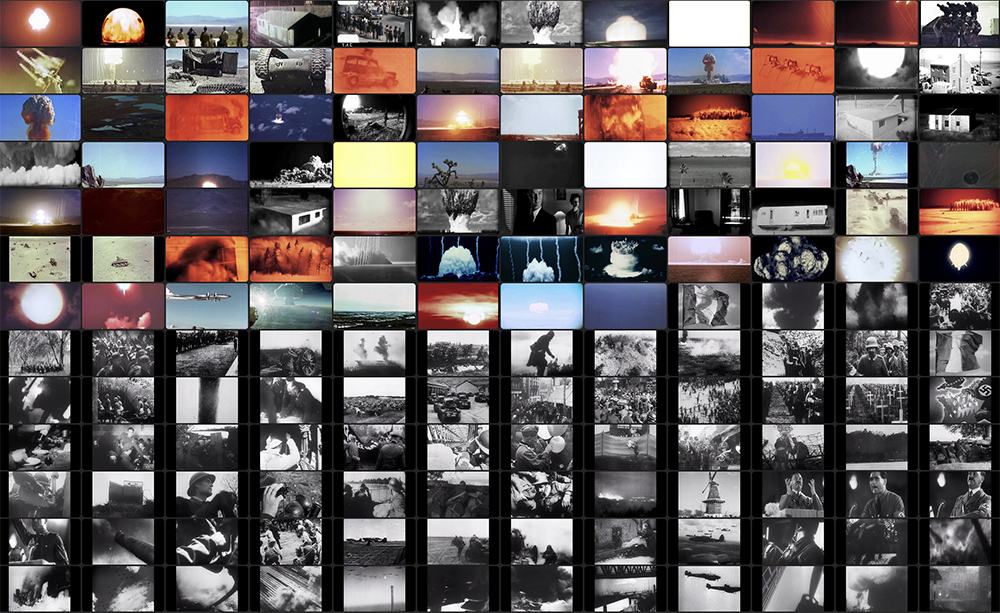
Purgatory Archive
2016 - jatkuva
Purgatory Archive on väkivaltaa ja konflikteja representoivan liikkuvan kuvan arkisto. Sen lähteinä on sotienaikainen arkistomateriaali, elokuvat, dokumentit, mainokset, uutispätkät, maisemapanoraamat ja kotivideot jotka esittävät väkivaltaa kategorioittain erilaisissa muodoissa. Installaatio ja siihen liittyvä avoin tietokanta muodostavat jatkuvan arkiston joka kritisoi olemassaolevia mediarepresentaatioita ja väkivallan glorifioimista, ja tutkii hegemonisen representaation voimaa visuaalisessa ja elokuvallisessa kielessä.
Purgatory Archive on osa Purgatory EDIT -projektia, joka on "kokeellinen käyttäjägeneroitu koostepohjainen elokuvallinen kokemus", ja jota kehitetään tällä hetkellä virtuaalitodellisuusprojektina.
War List CODEX
2014 - jatkuu
War List CODEX on laatuaan ensimmäinen arkisto. Se on kokonaisvaltainen lista kaikista "sodista, taisteluista, ryöstöretkistä, piirityksistä, kapinoista, vallankumouksista, pommituksista ja vastarinnoista" maailmassa vuodesta 3100 eaa. nykypäivään. Antiikin Egyptin konflikteista Ylä-Niilin alueella nykypäivän sotiin Gazassa, Syyriassa, Sudanissa, Kashmirissa ja Ukrainassa - War List CODEX esittää ihmiskunnan historian jatkuvana väkivallan ja konfliktin tarinana; planeetanlaajuisena sisällissotana.
War List CODEX, sen monissa muodoissaan - arkistona, esityksenä, julkaisuna, ja nyt verkossa tutkittavana tietokantana - on WAR ROOM ECHO Regarding the Pain of Other Cyborgs -projektin keskeinen komponentti, joka on suunniteltu hybridimuoseoksi, joka on milloinkin arkeologinen kaivaus, sotamuistomerkki tai hauta. Projektin nimi viittaa Susan Sontagin kirjaan "Regarding the Pain of Others", jossa Sontag kyseenalaistaa kontekstistaan riistetyn kärsimyksen ja tuskan esittämisen "sotavalokuvaamisessa".
Molemmat arkistot ovat jatkuvia, avoimia verkkoprojekteja ja niitä voi tutkia ilmaiseksi mistä vain. https://cruelradiance.aliakbarmehta.com/
ANASTASIA MITYUKOVA
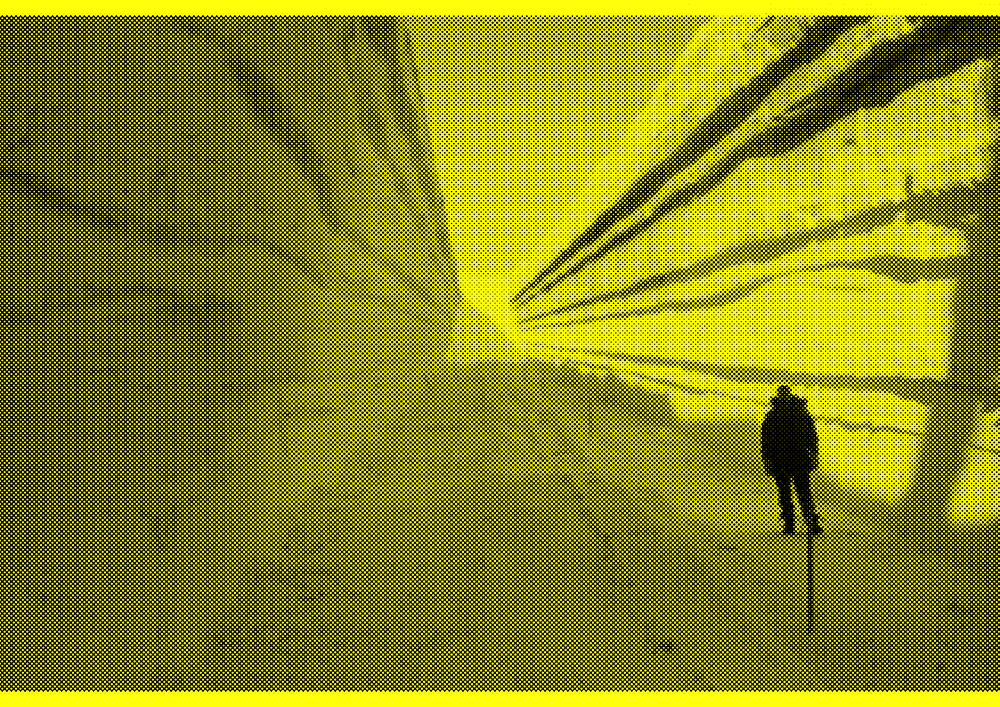
Project Iceworm, 2019–
Tampereen Taidemuseo 17.6.-15.10.2023
Anastasia Mityukova (s. 1982, Sveitsi) on Genevassa toimiva visuaalinen taiteilija. Hän sai valokuvauksen kanditutkintonsa Sveitsin ECAL-yliopistossa vuonna 2018 ja valmistui nykytaiteen maisteriksi HEAD-yliopistossa vuonna 2021. Hänen taiteellinen työnsä tutkii valokuvauksen välineen välinpitämättömyyttä. Hän haastaa tätä välinettä dokumentoimista lähestyvällä tavalla, käyttäen keräämisen, vertaamisen ja kenttätutkimuksen tapoja ja yrittää purkaa ymmärryksemme tietyistä tarinoista ja tapahtumista.
Vuonna 1959 Yhdysvaltain armeija rakensi Grönlannin jäätikön alle tukikohdan josta lähettää ohjuksia. Ilmastonlämpenemisen vuoksi tukikohdan hylkäämisen jälkeen paikalle jätetty ydinjäte alkaa nousta taas pintaan, ja uhkaa Thulen inuiittien ekosysteemiä. Mityukovan installaatio purkaa osiin tapahtumia ja rikkeitä: siirtomaa-asennetta, tuhoa ja saasteita, näyttäen saavuttamatonta ja näkymätöntä todellisuutta.
SUSAN SCHUPPLI
Cold Cases, 2022
Susan Schuppli (s. 1959, Iso-Britannia) on Iso-Britanniassa toimiva tutkija ja taiteilija, jonka työ tutkii ilmastonmuutoksen ja sotien materiaalisia todisteita. Schupplin tämänhetkinen työ keskittyy oppimaan jäästä ja kylmän politiikasta. Hänen luovia projektejansa on ollut esillä ympäri Eurooppaa, Aasiaa, Kanadaa ja Yhdysvaltoja. Schuppli toimii johtajana Lontoon Centre for Research Architecture, Goldsmiths Universityssä jossa hän on myös taiteilija-tutkijakumppani ja Forensic Architecture -osaston hallituksen jäsen.
Schupplin projekti Cold Cases on yhdistelmätyö videoita ja siihen liittyviä materiaaleja. Nämä videot ja materiaalit tutkivat kylmyyden poliittisia merkityksiä eri tapahtumien ja asiayhteyksien kautta, joissa lämpötilaan liittyvät eriävät kokemukset ja vaikutukset sekoittuvat juridisiin kysymyksiin, ihmisoikeusrikkomuksiin, mutta myös vaatimuksiin sosiaalisesta ja ympäristöllisestä oikeudenmukaisuudesta. Analysoimalla sekä nykyaikaisia että historiallisia "kylmiä tapauksia" nämä videot tutkivat lämpötilan taktista roolia tapahtumissa, ja spekuloivat uuden, kylmyyden määrittelemän lämpöpolitiikan noususta. Jokainen näistä "kylmistä tapauksista" paljastaa, miten lämpötila toimii väkivallan rekisterinä - väkivallan, johon sisältyy ympäristökolonialismin, pitkäaikaisten sosioekonomisten epätasa-arvoisuuksien ja jatkuvan rakenteellisen rasismin perinnöt.
ANAÏS TONDEUR
Carbon Black, 2017-18
Galleria Saskia 3.6.-2.7.2023
Yhteistyö ilmastomallintajien Rita van Dingenenin & Jean-Philippe Putaudin, JRC:n, ja Euroopan komission kanssa
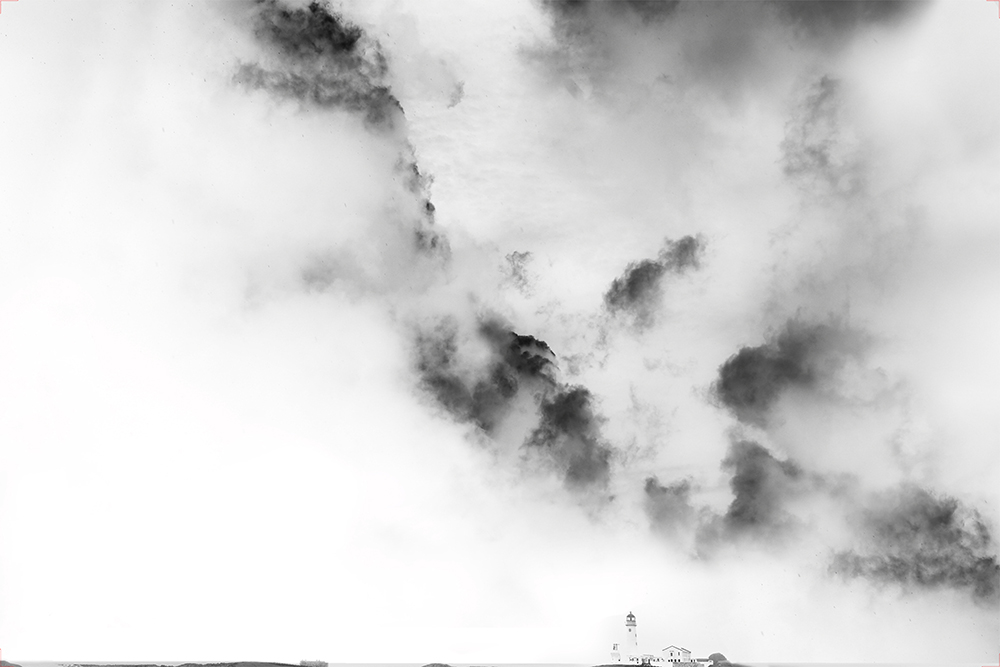
Teollisuuden poissaolosta huolimatta Fairin saaren asukkaan kärsivät tukehtumisesta. Kun Anaïs Tondeur saavutti saaren, hän lähetti maantieteelliset koordinaattinsa ilmastomallintajille Rita van Dingenenille ja Jean-Philippe Putaudille (JRC, Euroopan komissio), jotka selvittivät hänen kohtaamiensa hiukkasaineiden kulkumatkan. Tutkimalla aineiden kulkurataa ilmakehässä taaksepäin ja analysoimalla ihmisistä johtuvien ilmansaasteiden päästöjä he kykenivät määrittämään hiukkasten luomispaikan. Tämän kulkusuunnan pääpiirteittäinen määrittely johti taiteilijan yli tuhannen kilometrin matkalle, jossa hän kävellen, lautalla, kalastusveneellä ja autolla tutki näiden antrooppisten meteorien matkaa.
Tondeur kiteytti joka päivän valokuvaan taivaasta sekä filtteröimällä mustia hiilipartikkeleja joita hän löysi maskeista. Myöhemmin tieteilijä Putaud otti nämä partikkelit talteen ja muutti ne musteeksi. Musta hiili on itse asiassa noen sivumuoto, ja nokea on käytetty vuosisatojen ajan intialaisen musteen pääkomponenttina. Näin valokuvat printattiin osittain musteella joka oli luotu kuvaushetkellä taivaalla olleista partikkeleista.
Ekologiseen ajatteluun nojautuen Anaïs Tondeur etsii uutta poliittisen taiteen muotoa. Antropologiaa ja luonnontieteitä sekä myytinluontia ja uusia mediaprosesseja yhdistäen hän luo tarkkoja narratiiveja ja toimii interaktiivisesti tutkimuksissa joiden kautta hän tutkii muita olemassaolon muotoja maailmassa. Valokuvien, installaatioiden tai videoiden kautta hän etsii uutta estetiikkaa, jolla uudistaa tapamme nähdä asioita, ja tutkii syväluotaavasti luonnon ja kulttuurin eroja sekä ihmisten suhteiden muotoja ei-ihmisten kanssa.
Anaïs Tondeur (s. 1985, Ranska) valmistui Central Saint Martinin koulusta (2008) ja Royal College of Artsista (2010) Lontoossa. Hänelle myönnettiin Prix Art of Change 21 (2021) ja Ars Electronica Cyber Arts Honorable Mention (2019). Hänen töitään on ollut esillä kansainvälisissä instituuteissa kuten Center Pompidoussa Pariisissa, Serpentines Galleriesissä Lontoossa, Bozaissa Brysselissä, Biennale Di Veneziassa, Pavillon Frenchissä, Kröller-Müller Museumissa Hollannissa, Dortmund U:ssa ja Museum Für Kunst und Gewerbessä Saksassa, Spencer Art Museumissa Yhdysvalloissa, Choi Centerissä Kiinassa ja Nam June Paik Art Centerissä Koreassa.
TOSHIO FUKADA
The Mushroom Cloud, 1945
Tampereen Taidemuseo 17.6.-15.10.2023
6.8.1945 Toshio Fukada (1928-2009, Japani) kuuli räjähdyksen läheiseltä armeijatarvikevarastolta. Hän näki kiehuvan atomipilven. Hän kiirehti hakemaan kameransa ja etsimään hyvän paikan, josta tarkkailla tapahtunutta. Nämä kuvat otettiin hetkiä räjähdyksen jälkeen 2,6 kilometrkiä sen sydämestä. Fukada oli kuvan ottaessaan kuusitoistavuotias.
Sodan jälkeen Fukada pyöritti kamerakauppaa ja liittyi valokuvaajaryhmään nimeltä Hiroshiman Atomipommituhon Valokuvaajaliitto, joka perustettiin vuonna 1978. Hän valokuvasi armeijatarvikevaraston rakennuksia, kun niitä purettiin. Fukada lahjoitti negatiivit, joista hän oli pitänyt kotonaan tarkasti huolta, Rauhan muistomerkkimuseolle vuonna 2004.
EIICHI MATSUMOTO
Atomic Shadow, 1945
Tampereen Taidemuseo 17.6.-15.10.2023
Toisen maailmansodan aikana Eiichi Matsumoto (1915-2004, Japani) toimi valokuvaajana Asahi Shimbun Tokyon päätoimiston julkaisuosastolla, jossa hänen työnsä käsittelivät useiden japanilaisten kaupunkien pommittamista. Sodan loputtua sanomalehti päätti julkaista erityisnumeron atomipommeista lehdessään Scientific Asahi. Asahin toimittaja ja Matsumoto matkustivat Hiroshimaan ja Nagasakiin ottamaan kuvia. Vuonna 1945 he valokuvasivat Nagasakia 25.8.-15.9. ja Hiroshimaa 18.-25.9. Matsumoton valokuvien levitystä rajoitettiin säädöksillä, jotka koskivat graafisen materiaalin julkaisemista ihmisuhreista. Yhden Matsumoton hautapaikasta ottaman kuvan vuoksi prefektuuri suoritti paikalla kaivauksen ja löysi ihmisjäänteitä Shukkeienin puutarhassa heinäkuussa 1987.
Valokuvassa Atomic Shadow näkyy Nagasakin armeijatukikohdan puuseinälle vuonna 1945 ikuistunut sotilaan ja tikapuiden varjo.