

Backlight 2026
KATERINA ANGELOPOULOU (Greece)
The Fumes of Mars, 2025
Photographic Centre Nykyaika
Katerina Angelopoulou (b. 1982, Athens) is an artist whose lens-based practice explores the tension between private memory and public record, grounded in two decades of work in performance design and dramaturgy across theatre, dance, opera, and film. Through long-term research into oral histories and archival material, she recovers silenced pasts, weaving them into elliptical, non-linear narratives that question institutional power and the construction of collective memory.
‘A large wildfire has a very distinctive sound. No one can tell you unless they have been in one. It is a sound that can haunt you…’
On 23 July 2018, one of the deadliest wildfires ever recorded swept through Mati and neighbouring areas, just 30 kilometres from Athens. Over a hundred lives were lost. Artist Katerina Angelopoulou survived the fire, fleeing with her mother and three-year-old daughter.
The Fumes of Mars is a counter-archive, a forensic and deeply personal investigation into how official narratives of catastrophe are constructed and enforced, and how governance failures and the climate crisis converge in collective trauma. It brings together photographs from the day of the event and the aftermath, survivor testimonies from public archives and the artist’s own, aerial maps, weather and aircraft reports, CCTV footage, and personal artefacts recovered from the ruins: jewellery, books, glasses. The work challenges the official narrative — one that persists — in which facts were concealed and victims held culpable.
Black-and-white photographs of interior and exterior landscapes, devoid of human presence, shot in the aftermath, convey a soot-permeated world. They give way to colour images taken on the day itself: entering a space of heightened reality. The personal artefacts — what one decides to save and what to leave behind in the face of having to abandon one’s home — are photographed as archaeological remains, fragments through which the story of a life can begin to be reconstructed.
Its structure is non-linear, mirroring how trauma fractures narrative, fragmentary, refusing easy resolution. Though rooted in a specific catastrophe, the work raises urgent questions: who controls the narrative of disaster and who is silenced in its aftermath. It speaks to something universal: the failure of institutions, the invisibility of survivors, and the struggle for accountability in an era of compounding climate catastrophe.
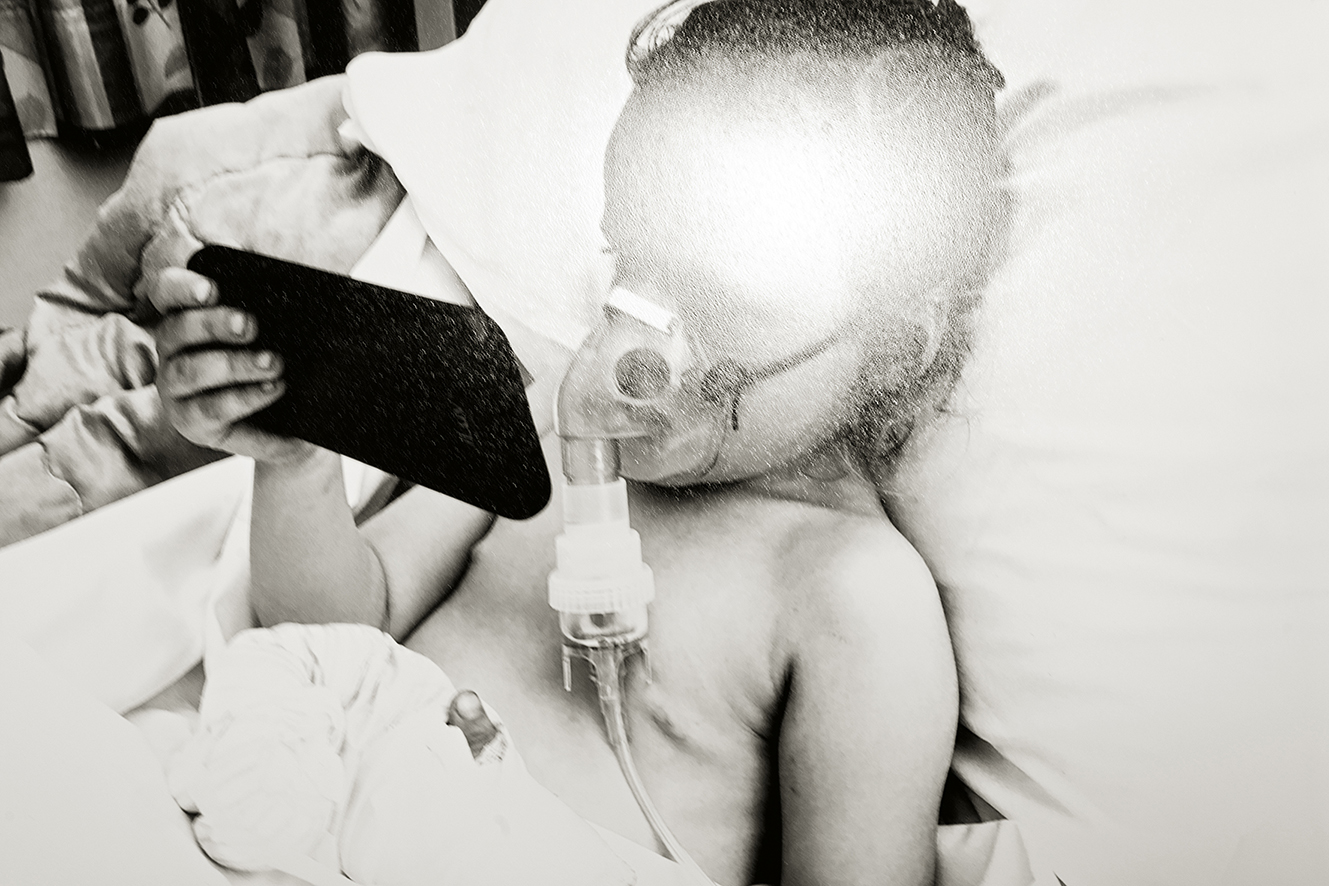
JO DUCK (Australia)
Razzle Dazzle: Hiding in Plain Sight
Vooninki
Driven by an appreciation for all things camp, joyful, and absurd, Jo Duck’s photography centres on crafting unique characters who live confidently in worlds of their own. Duck’s work radiates a humour that contributes to a distinctive style, one that is simultaneously strange and heartwarming.
In World War One, Allied Forces discovered that if you can’t hide, you might as well be ostentatious. They painted wild geometric patterns onto the hulls of their ships. Not to conceal them, but to make them unreadable. Enemy submarines could see the vessels but couldn’t judge their speed, direction, or location. The strategy was called Razzle Dazzle – hiding in plain sight by scrambling the information observers could extract.
Artist and researcher Adam Harvey explored a timely version of this with his 2010 project CV Dazzle, using hair and makeup to confuse facial recognition by inverting the face’s natural light and dark areas. His work proved early algorithms could be fooled through creative intervention.
Since then, the stakes have increased. During the 2019 Hong Kong protests, students used umbrellas and masks not just for protection, but to create visual barriers against technology used to identify demonstrators. In 2026, with mass protests continuing globally, ICE has implemented a facial recognition phone app federal courts have deemed too inaccurate for arrest warrants. Facial recognition is riddled with what Joy Buolamwini of the Algorithmic Justice League calls “the coded gaze”, racial, ableist, and gender profiling baked into the algorithms. Women of colour aged 18-30 are the least recognisable and most wrongly identified.
Worldwide, more people are urgently concerned with maintaining anonymity in public spaces. Razzle Dazzle is a series of photographic portraits of people trying, with varying degrees of success, to evade this technology through absurd, analogue methods. I’m interested in bringing Scooby-Doo hamminess to a genuinely frightening topic and find there’s something enjoyable about responding to absurd problems with absurd solutions.
Everywhere we go, we are recorded via dash cams, Ring doorbells, public transport and supermarkets armed with hundreds of cameras. We’re told this is for our safety, that it’s just how the modern world works. What we’re not told is what happens to our biometric data once collected, who has access, how long it’s stored, or what it might be used for in an uncertain future.
Try to opt out and you’re pushed to the fringes and labeled a conspiracy theorist, unable to travel, shop or move through the world freely. Choice has been taken away. My characters are attempting, often poorly and absurdly, to take some back. Through comical disguise and deceit, Razzle Dazzle offers deeply human responses to our changing world. My subjects use whipped cream pie crusts, venetian blind costumes, portable waterfalls, bandages and streamers , all completely analogue methods acknowledging their own futility.
DAVID ELLINGSEN (Canada)
Days of Plenty: An Archive of Abundance Various, 2025
Vooninki
David Ellingsen is a Canadian photo-based artist working through long-term projects focusing on forests, biodiversity and climate. His work draws upon a colonial family history, one often embedded within British Columbia’s troubled forest industry, and reflects on the impacts of resource extraction and consumption on past, present, and future eco-systems.
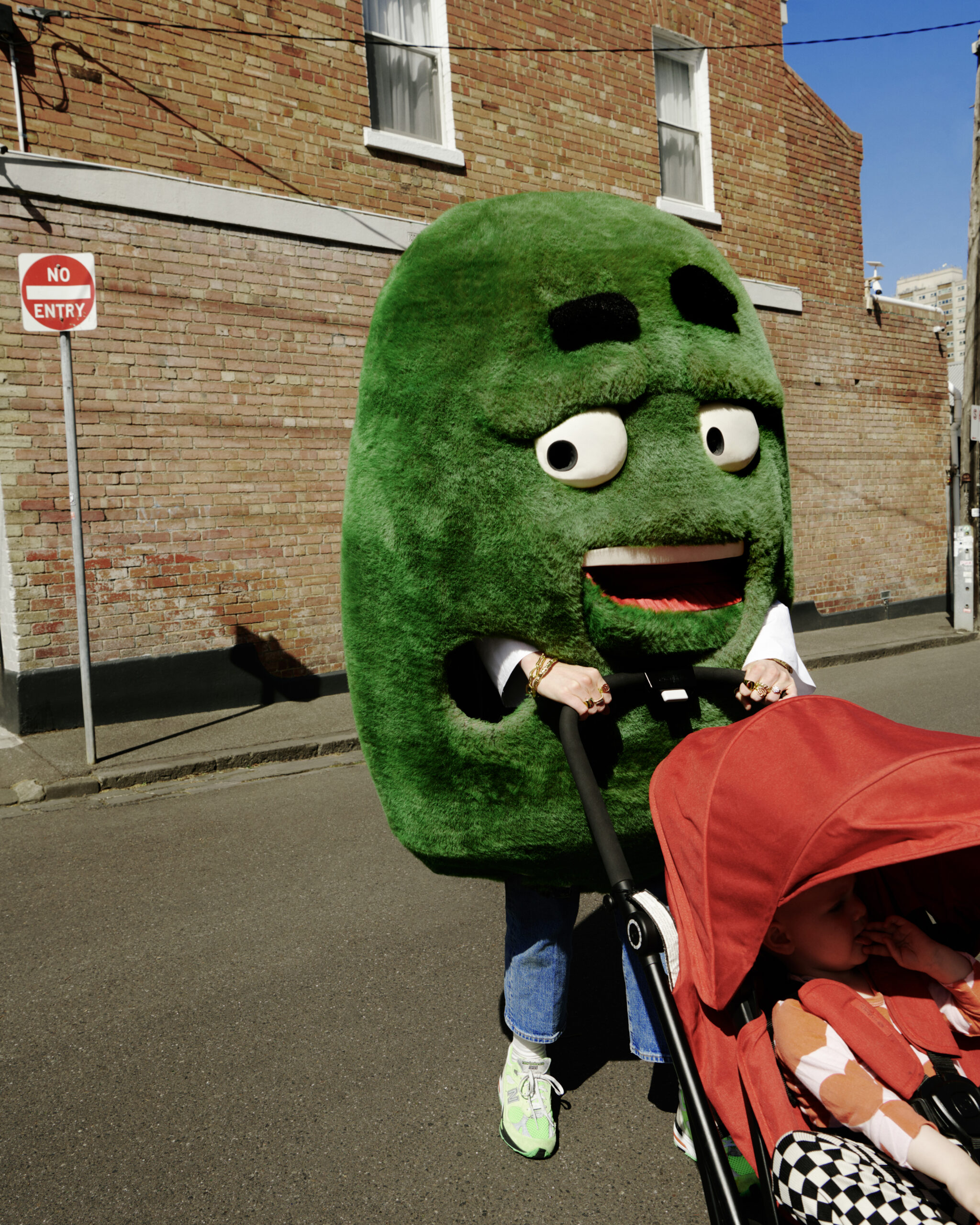
Through historical reinterpretation…a counter history…Days of Plenty speaks to biodiversity loss, ecological grief, and the Rights of Nature through photographic history and archives.
Most assessments of wildlife populations use 1970 as their starting point. With vast populations already extinct by that time – including the passenger pigeon, great auk, aurochs, and very nearly the plains bison – it is difficult today to imagine how the wild world may have looked before humanity’s Great Acceleration. Generationally shifting baselines have obscured our understandings of the Earth’s capacity for abundance.
But we do have history’s photographs to remind us…frozen moments granting us glimmers of now almost unimaginable natural abundance, artifacts recalling forgotten responsibilities.
GANSLMEIER&ZIBELNIK (Slovenia / Germany / Netherlands)
Bereitschaft | How TikTok became obsessed with a fascist statue, 2025
Vooninki
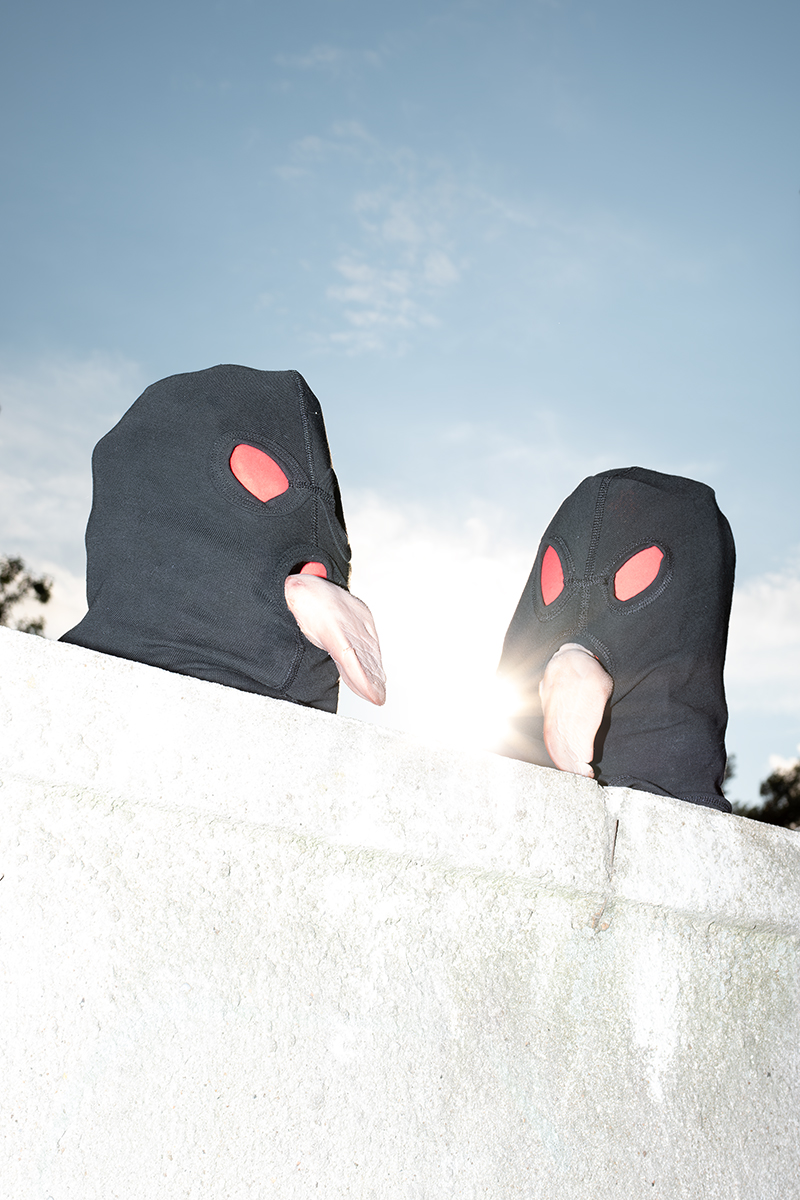
Ganslmeier & Zibelnik (b. 1990, Munich, and 1995, Ljubljana) are an artist duo working with photography and video, focusing on youth identity formation, particularly the influence of radical ideologies on young people. Their practice seeks to dismantle the visual language of radical ideologies and investigates how visual art can counteract radical political narratives while fostering sensitivity toward social issues shaped by conflicting perspectives.
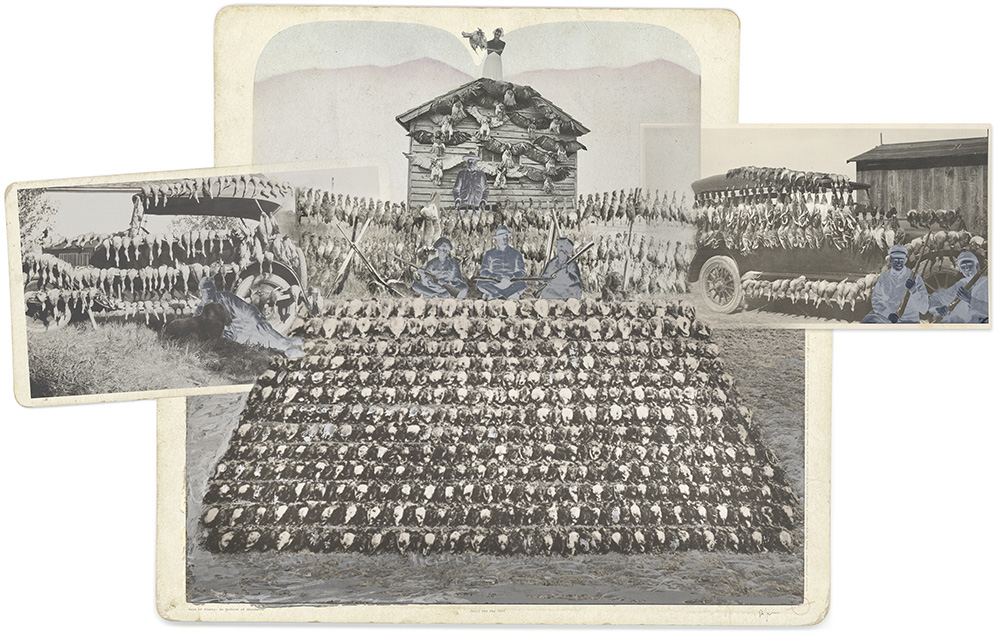
Bereitschaft is an ongoing photograpy and video-based project by the artist duo Ganslmeier & Zibelnik that examines how far-right ideologies are normalised and disseminated through the mainstream visual language of social media.
In 1939, German sculptor Arno Breker (1900-1991) crafted a statue titled Bereitschaft, portraying a male, nude warrior drawing a sword, symbolizing preparedness for the impending call to arms faced by the German people. In 2023, this sculpture became an obsession on TikTok. Through their video work and accompanying photography series, the artists delve into the glorification of the ‘sculpted’ male physique and the advocacy of self-discipline within TikTok fitness trends, examining how these inclinations mirror fascist tendencies and serve as symptoms of a right-wing ideological shift.
JOEL JIMENEZ JARA (Costa Rica / Spain)
GLIMMERS, FEATHERS AND STARING SKIES, 2025-2026
Photographic Centre Nykyaika
Joel Jimenez (b. 1993, Costa Rica) is an artist and filmmaker based in Madrid, Spain. Working across photography, installation, and moving image, his practice examines the politics of memory and the ways power and ideology are inscribed in space. Through research-based projects, he explores landscapes, architectures, and archives as carriers of shared histories, engaging with themes of erasure, displacement, and the instability of historical narratives. His work often moves between documentation and speculation, bringing together archival materials, environmental observation, and mythological references, with a growing focus on non-human forms of memory and communication.
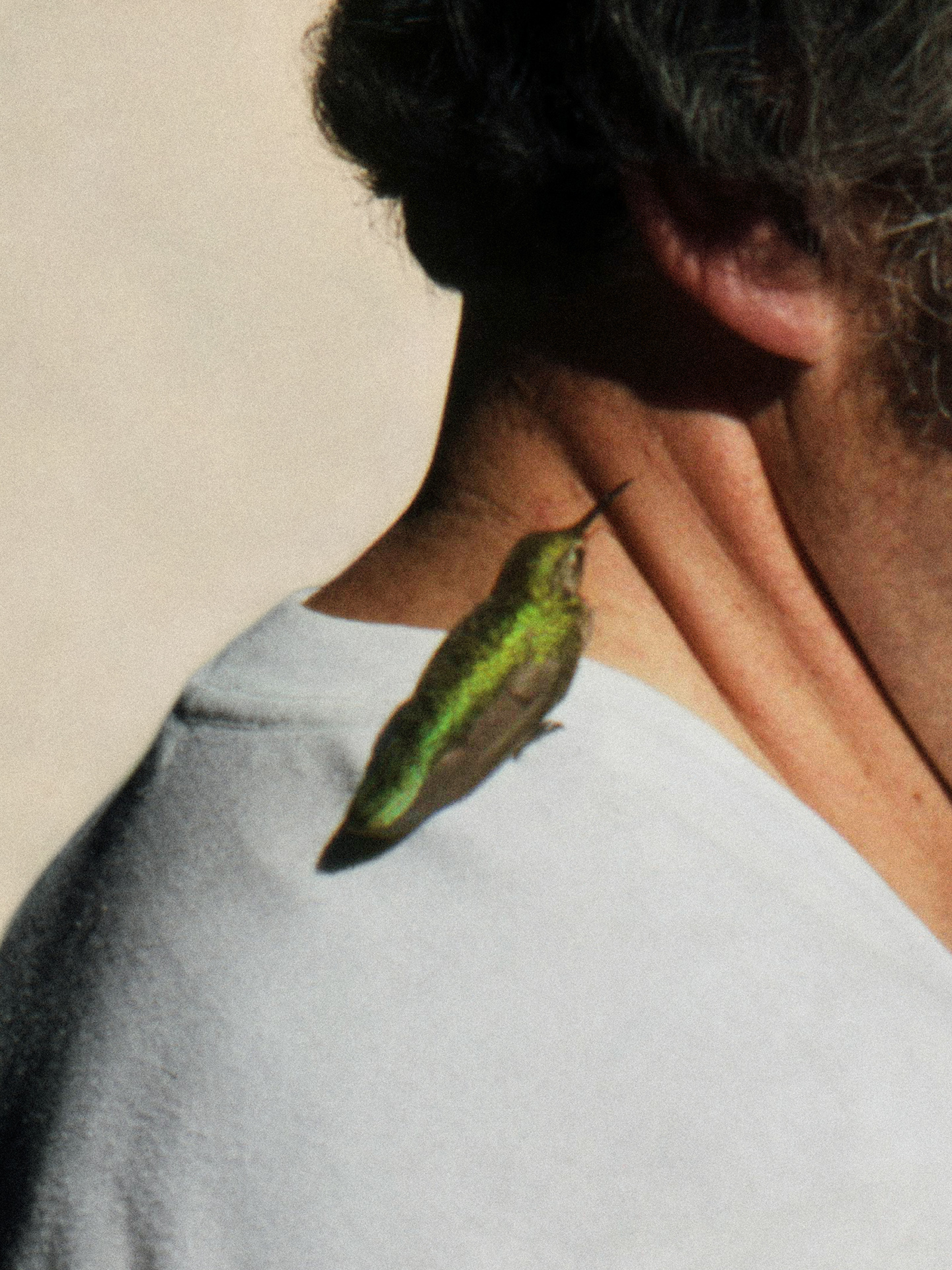
Hummingbirds are the only birds capable of flying backwards; their suspended motion mirrors the process of grief, moving into the past while still held in the present. A few years ago, I left my home country, Costa Rica, finding my own migratory route across the ocean. During that time, my father passed away from a neurodegenerative disease that slowly took his movement and his voice.
When he was well, my father spent his days tending to the flowers in our garden and caring for a hummingbird that visited the red feeder he placed. After his death, my mother told me that the hummingbird continued appearing whenever she walked through the garden.
She explained that, in Costa Rican folk belief, hummingbirds carry the souls of the dead and return to greet those they love; a belief handed down through generations and influenced by the cosmology of the Boruca, an Indigenous community in Costa Rica whose spiritual traditions are entwined with the natural world.
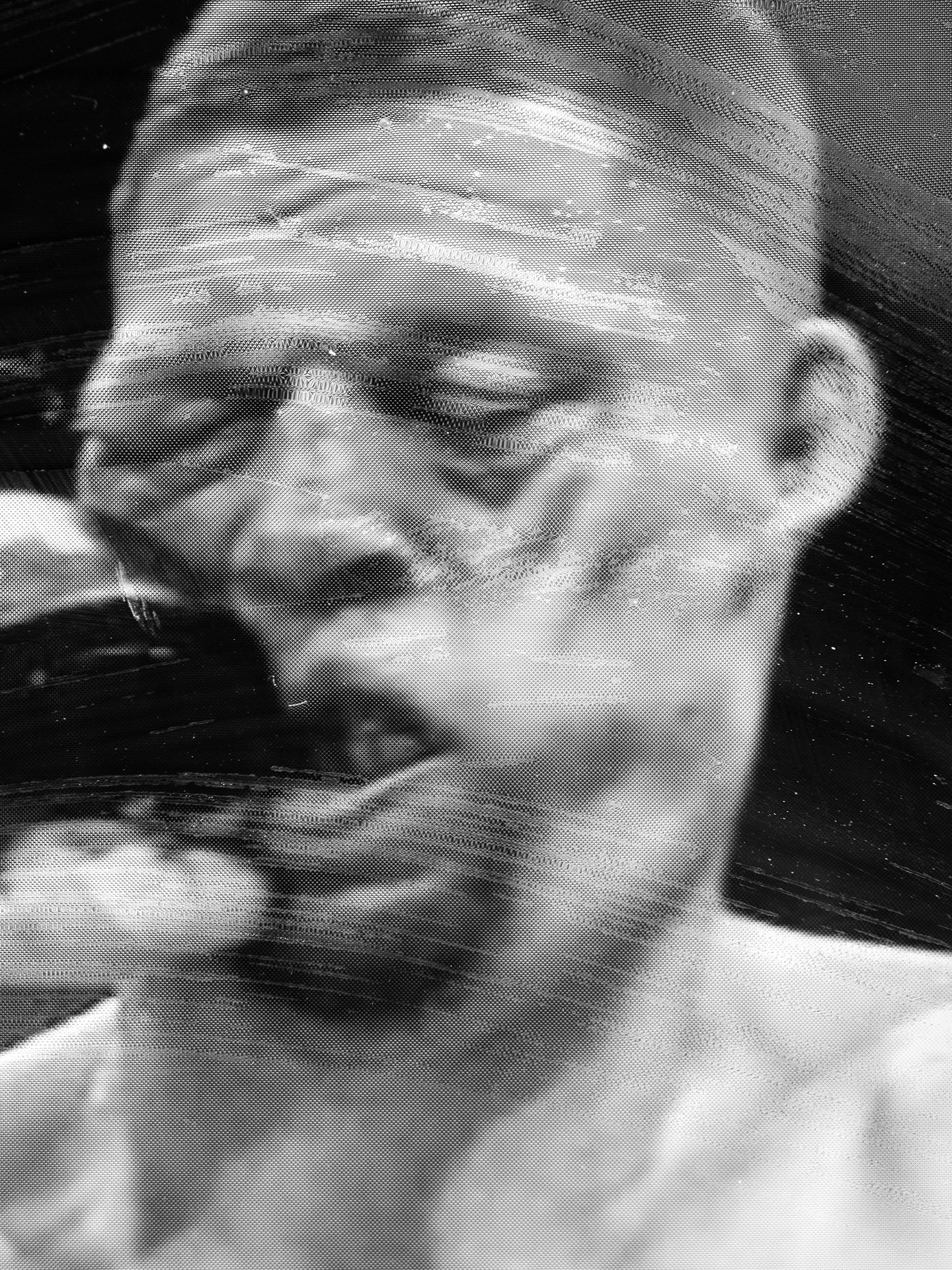
Glimmers, feathers and staring skies explores the hummingbird as a migratory body that transgresses dominant knowledge systems, moving between science and myth, between the earthly and the celestial. Engaging with personal archives alongside colonial and ornithological materials, the project interrogates how photography has attempted to capture, verify, and classify a fleeting body.
In an age of ecological fragility, the project considers how we attend to and relate to more-than-human others. Conceived as a practice of care shaped through interspecies relationships, it opens alternative ways of experiencing grief and memory. In doing so, it becomes a means to reconnect with my father, reimagining his still body through the language of flight.
AKSHAY MAHAJAN (India)
People of Clay
Vooninki
Akshay Mahajan (b. 1985, India) is an artist, photographer, writer, teacher, and curator based in Goa. His practice uses photography as a way to think through culture, collective memory, folklore, myth, and the afterlives of colonial histories. Moving between documentary, archival research, staged images, text, and installation, his work often examines how postcolonial realities remain haunted by precolonial memory, and how landscapes, cities, objects, and communities carry the traces of unresolved histories and failed futures.
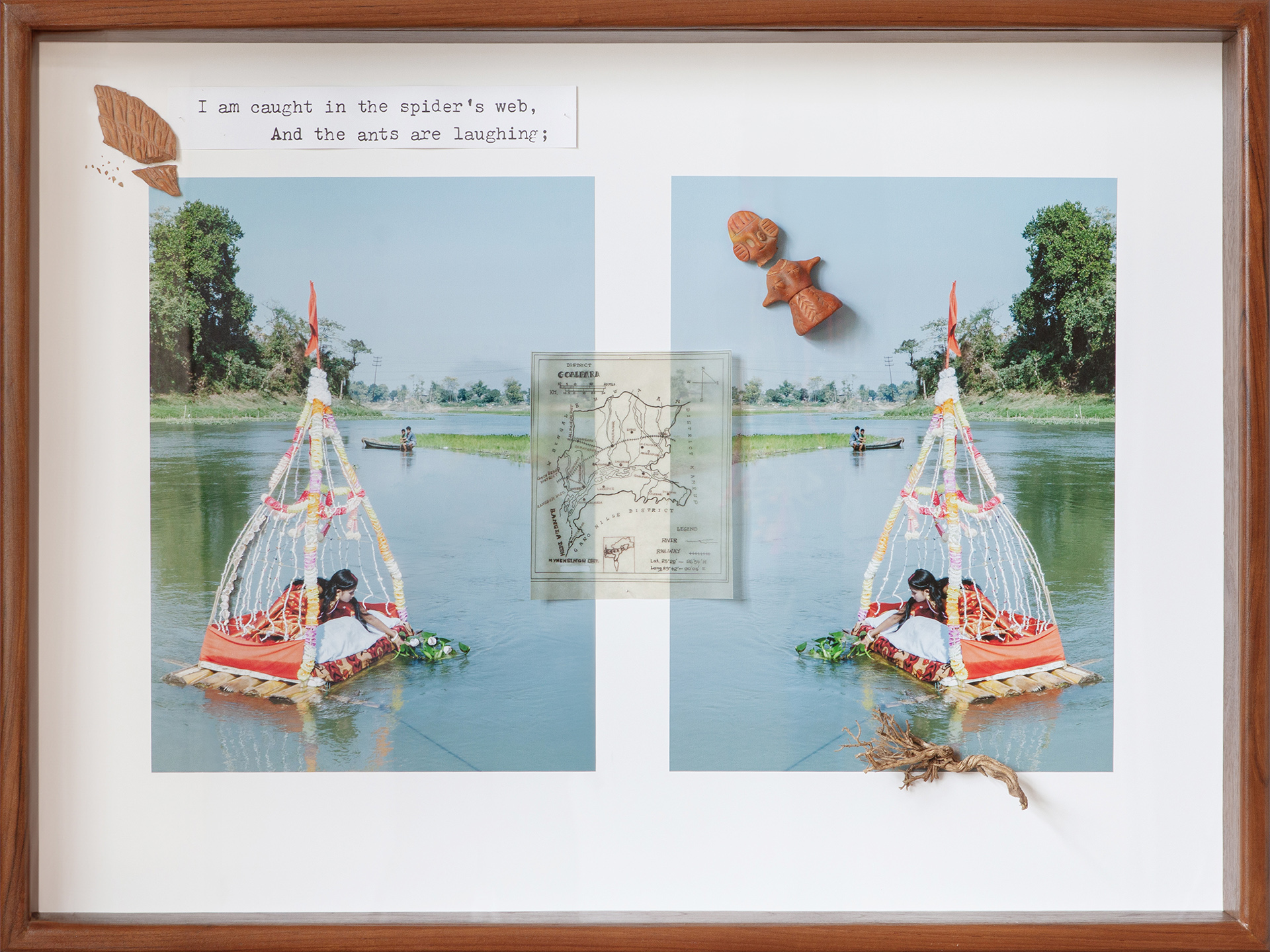
It took me many years to notice that in quiet moments, when no one was listening, she would sing. Simple tunes, carrying haunting notes of melancholy. I would try to grasp the words of a language I did not yet know how to place — folksongs of a forgotten people.
Using these songs as a map, I began to sculpt a new, amorphous personal identity: one not inherited by birth, but through love. I travelled to her corner of India, a region bordering Bangladesh, inherited by me through marriage and bifurcated by the colonial borders of Assam and Bengal. The elision of this identity is visible in colonial documents. In The People of India, a nineteenth-century British ethnographic album compiled after the 1857 revolt, the caption beneath an elderly Rajbanshi man reads: “Rajbansi. Aboriginal. Now Hindoos.” The description is both pejorative and inaccurate, since the Rajbanshis were never entirely Hindu. Their folk culture, language, songs, and traditions were slowly pushed into obscurity, absorbed into larger regional and religious identities.
People of Clay attempts to pick at the remnants of this folk psychogeography as though following a folktale already beginning to unravel. Presented as an assemblage of photographs, archival material, text, lyrics, and terracotta forms, the work moves between documentary evidence and myth, between what is remembered, misnamed, sung, and forgotten.
The work is also a reminder that we are all people of clay: shaped, broken, remade, and never entirely chained to the borders we inherit. Like me, one may sometimes find identity not through blood or land, but through love.
ANDRE RAMOS-WOODARD (USA)
BLACK SNAFU
Vooninki
Raised in the Southern states of Tennessee and Texas, André Ramos-Woodard (he/ they) is a photo-based, mixed-media artist who uses their work to emphasize the experiences of marginalized communities while accenting the repercussions of contemporary and historical discrimination. By combing photography with illustration, text, and digital manipulation, his art conveys ideas of communal and personal identity, influenced by their direct experience with life as a queer African American. Focusing on Black liberation, queer justice, and the reality of mental health, he aspires for his art to help bring Power to the People.
Anti-Blackness seems inescapably mixed into whatever context I place it into; literature, science, government, health, art… look into any “field” and see for yourself. My people have had to cry, scream, and fight for respect for centuries, and we still have not gained what we deserve. To move past the damage this has done to our society, we can’t simply deny our history—we must recognize it. We must acknowledge the many ways in which this country has perpetuated a racial hierarchy since these lands were first colonized and stripped from indigenous peoples, and Black people were stolen from their native land and brought to America.
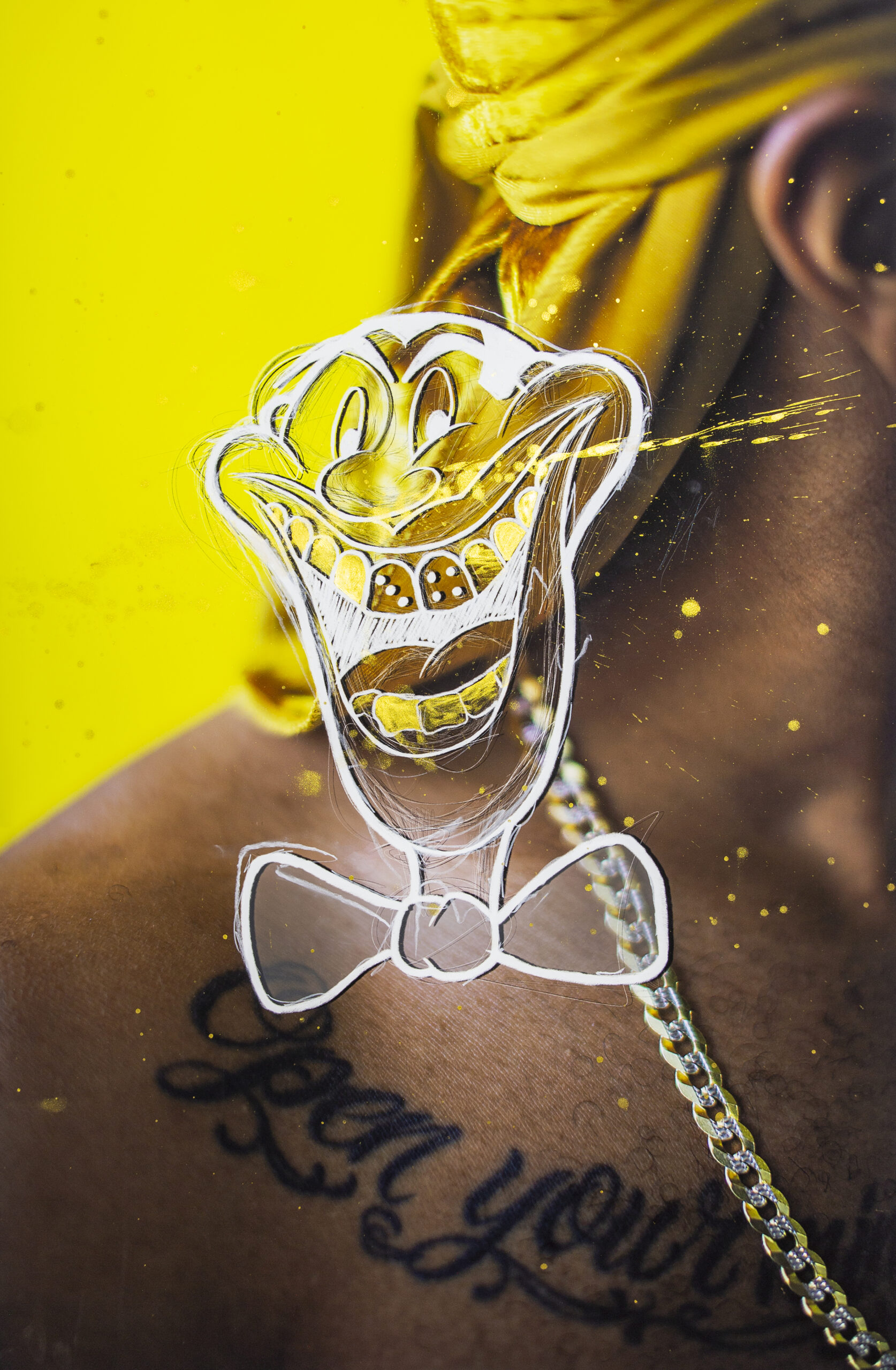
In Black Snafu (Situation Niggas: All Fucked Up), I appropriate various depictions of Black people that I find throughout the history of cartooning and juxtapose them with photographs that celebrate and line up more authentically with my Black experience. The photographs I create vary in subject matter; I seek to include celebratory portraits, didactic still lives, and representational documentations of places rich in their relation to Black community, allowing me to fight back against the history of the racist caricature that I reclaim in my work. By combining these ambivalent visual languages, I intend to expose to viewers America’s deplorable connection to anti-Black tropes through pop culture while simultaneously celebrating the reality of what it means to be Black.
RAFAEL RONCATO (Brazil / Netherlands)
Tropical Trauma Misery Tour, 2018-2023
Vooninki
Rafael Roncato (b. 1989, Brazil) is an interdisciplinary visual artist, editor, and educator working between Brazil and the Netherlands. His practice examines colonial memory, media myths, and the politics of representation, focusing on how images construct belief systems and shape collective perception. Grounded in documentary photography and expanded through archival research, video, and editorial strategies, Roncato develops semi-fictional, non-linear narratives that interrogate contemporary media landscapes and historical power structures. Inspired by comics, cinema, and Brazilian (post)modernism, his work moves fluidly across formats, from artist books to exhibitions and multimedia projects.
Tropical Trauma Misery Tour is a speculative documentary photography project that unpacks the farcical spectacle and digital chaos of Brazil’s far-right populist rise, while interrogating the global strategies of misinformation, martyrdom, and narrative manipulation that define contemporary politics.
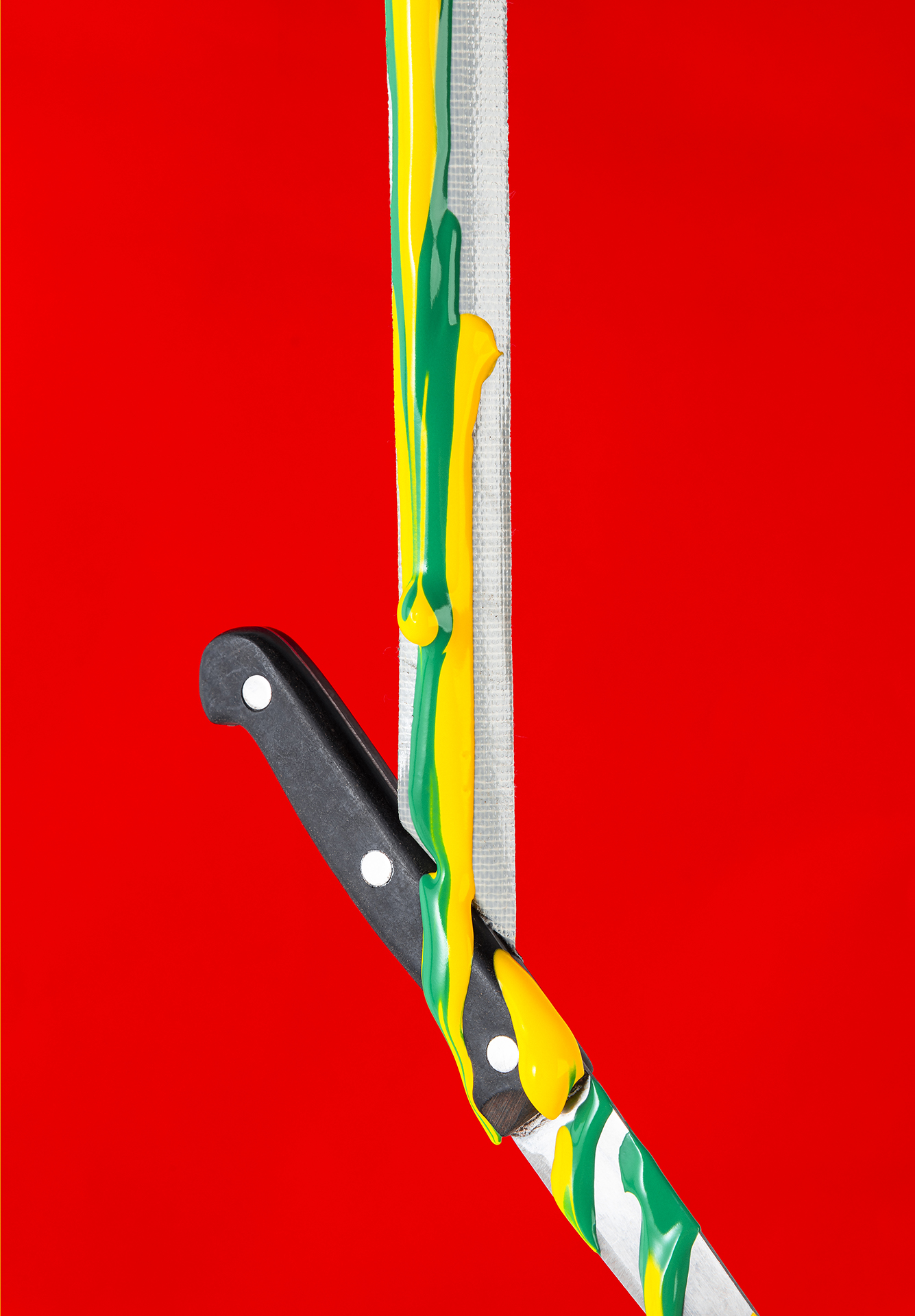
Taking the 2018 stabbing of Brazilian presidential candidate Jair Bolsonaro as a catalyst, the work traces how a single event was amplified through social media into a foundational myth. Bolsonaro’s self-staging as victim-turned-saviour opened the floodgates for an unprecedented wave of networked propaganda, where falsehoods, memes, and doctored images were used not just to convince, but to confuse, destabilise, and dominate. At its core, this project is a visual investigation into the weaponisation of media and contemporary political mythmaking.
Through staged imagery, appropriated material, archival fragments, and meta-fictional strategies, Tropical Trauma Misery Tour builds a three-act theatre of political farce. It reflects on how digital populism blurs the lines between fact and fiction, individual and collective authorship, emotion and evidence. While rooted in the Brazilian context, the project resonates with broader European and global realities: the manipulation of truth in wartime narratives, the emotional spectacle of strongmen politics, and the urgent need for media literacy in the age of algorithmic persuasion.
What happened in Brazil did not stay in Brazil. The tactics of confusion, the elevation of political figures into untouchable martyrs, the saturation of digital space with falsehoods masked as truth—these have travelled fast and far. From the disinformation trenches of Gaza to the echo chambers of the American alt-right, from manipulated media in Eastern Europe to AI-generated propaganda seeping into everyday feeds, the chaos strategy is now transnational. In this moment, where images no longer simply represent but actively shape our political and emotional realities, Tropical Trauma Misery Tour calls for critical seeing and for an urgency to read between the layers of performance, emotion, and digital distortion.
Rafael Roncato proposes a visual practice that doesn’t just reflect the world back to us, but invites us to decode it. To recognise how illusion becomes infrastructure. To ask: What does it mean to witness? To believe? To resist? And perhaps most importantly—how do we keep our eyes open when truth is constantly rewritten before our eyes?
SASHA VELICHKO (Belarus / Poland)
State of Denial
Vooninki
Sasha Velichko (b. 1993, Slonim, Belarus) is a research-based artist whose practice spans photography, installation and new media. Her work investigates propaganda, post-truth, manipulations, collective and individual trauma. With a master degree in radiophysics she integrates scientific thinking into her artistic practice. After being politically convicted and persecuted in Belarus and forced to flee, she relocated to Warsaw.
I’m a political exile from Belarus. In my homeland, a repressive dictatorship prevails, suppressing freedom of expression. The government-controlled media conceals information regarding the increasing count of political detainees, the alarming rate of disappearances, and the ineffectiveness of laws and the constitution in safeguarding the rights of individuals.
In my project, I explore the phenomenon of digital everyday life through the interaction between human and media channels. Contemporary society, which is filled with countless distractions vying for our attention has become commonplace to avert our gaze from images that evoke discomfort.
The body of work is divided in two parts. The first part contains selection of absolutely absurd and scary stories of detentions from Belarus. I researched them and created staged photographs based on those stories. In a country ruled by a dictatorship, people are put in jail for speaking Belarusian language, praying, carrying flowers, wearing white-red-white clothes — the colors of our historical flag, now labeled extremist.
In a second part, I use the news titles that came out on the specific date of these arrests. The neural network utilized the title of each news item as input to generate corresponding images. Numerous irrelevant and peculiar news articles emerged coinciding with the dates of arrests. For each case, I selected 12 headlines published on the day of the arrest—to show how, in moments of crisis, propaganda generates visual and informational noise.
I aim to demonstrate how the agenda seeks to redirect our focus away from the crucial issues. Additionally, I want to explore our tendency to evade problems of significance and instead occupy our minds with superfluous entertainment content.
TIMO WRIGHT (Finland / Japan)
Search and Destroy, 2026
Vooninki
Timo Wright is a media artist and filmmaker based in Helsinki, Finland and Tokyo, Japan. His artistic practice combines deeply personal topics with larger political and societal questions. His aim is to create works that look at the world not only through personal experience, but across the different forms of politics, society, customs, and memory. As an artist, he is interested in working across different platforms and formats, and in many works he has wanted to push technical boundaries.
What if we could see the world through the eyes of an algorithm?
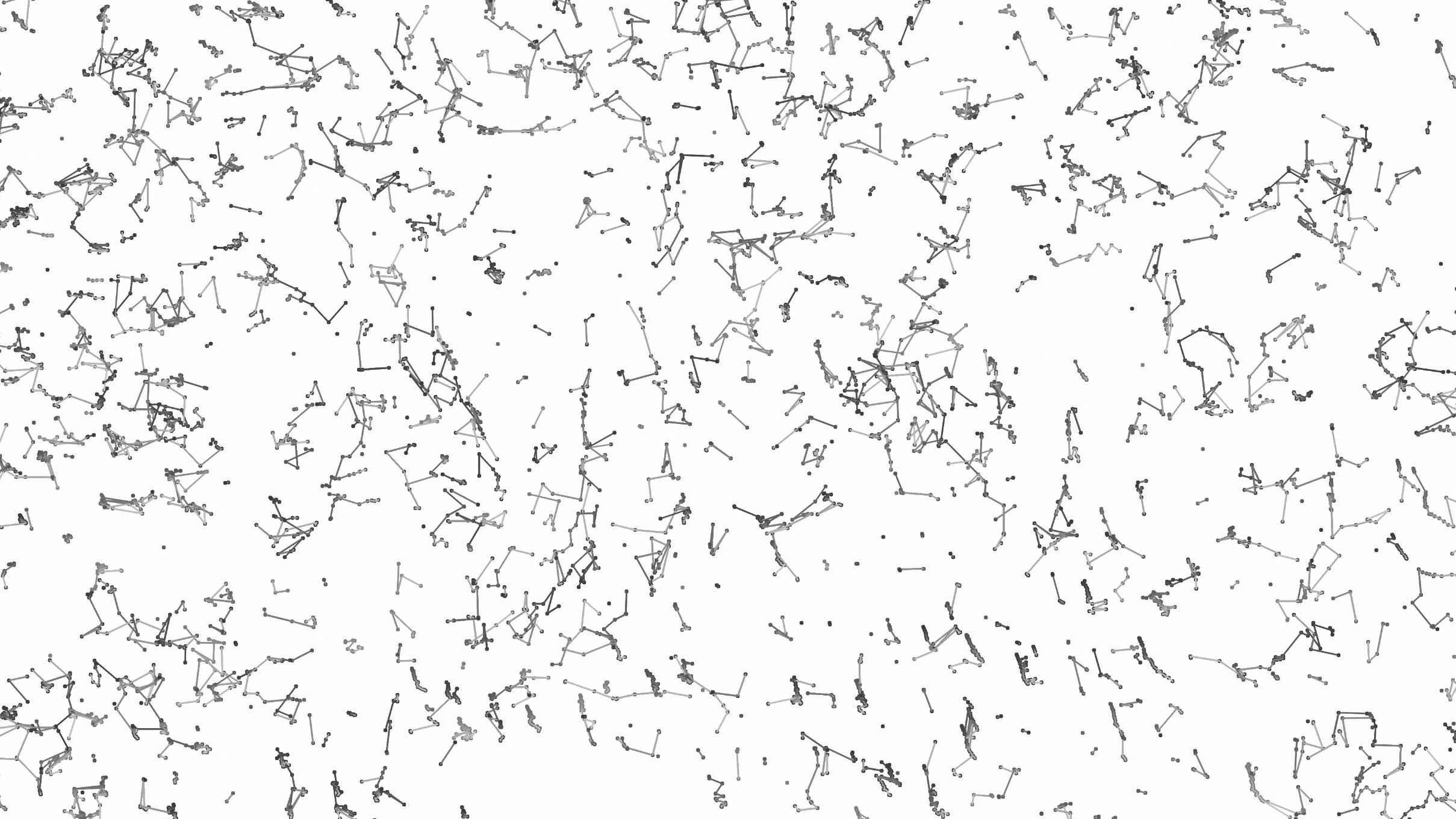
Search and Destroy is a series of works exploring how different algorithms perceive our visual world. The centrepiece is a video in which a custom-made algorithm analyses a short documentary, made specifically for this project, about public and private surveillance and gaze. The viewer never sees the original footage — only renditions of extracted information against a white background: tracked faces, bodies, camera movement, compression artefacts, objects, and more.
The work begins playfully — familiar, even lighthearted — before gradually revealing something more unsettling beneath the surface.
Mobile phone camera filters, self-driving cars, passport control machines and other everyday technologies make our lives easier, yet they share much of the same underlying technology as AI warfare systems and surveillance networks — tools of control hiding in plain sight.
The project comprises a single-channel experimental documentary, a series of prints, and a book.
SHEUNG YIU (Hong Kong/Finland)
The Ouroboros of Faces, 2025
Vooninki
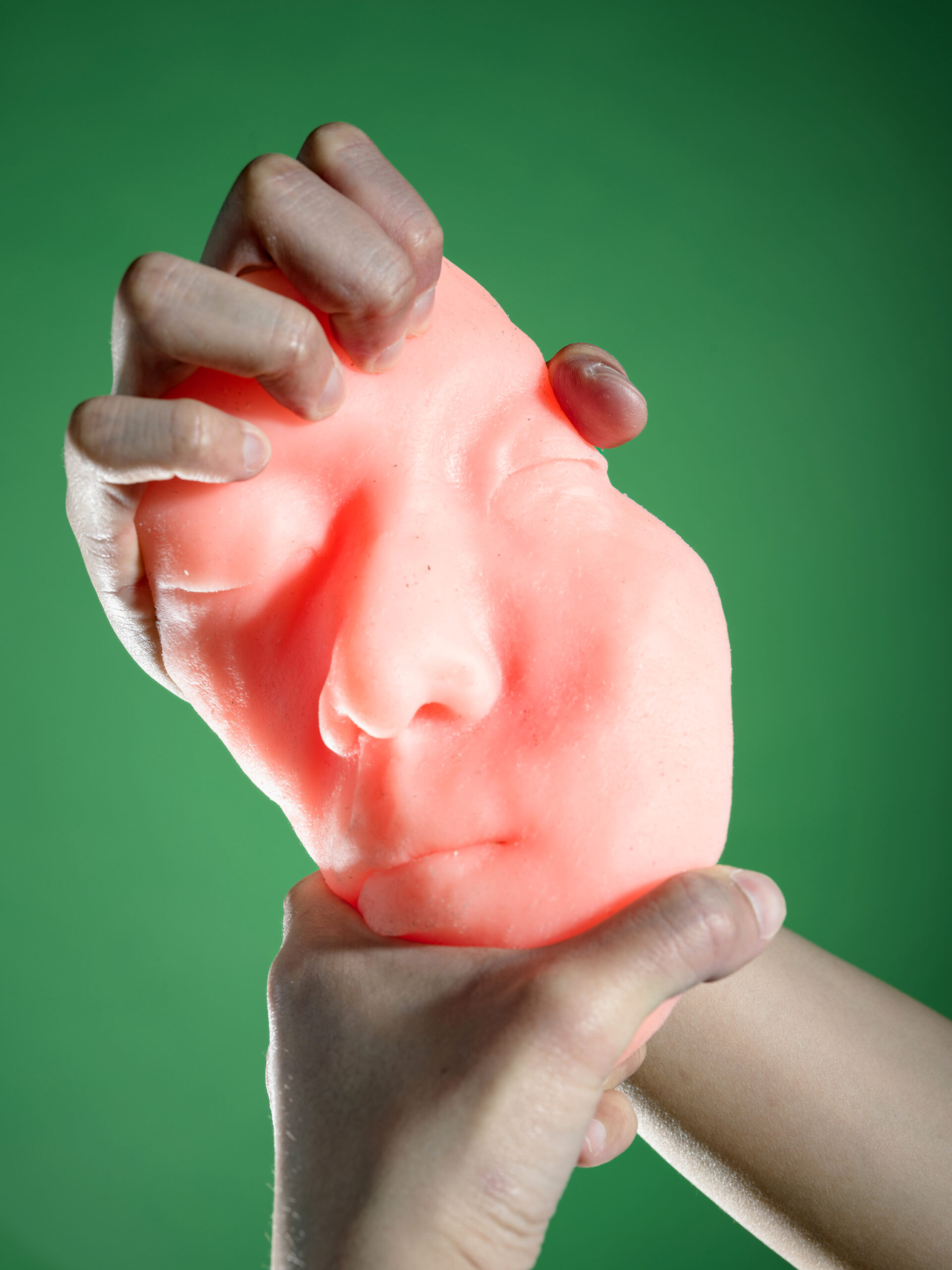
Through the machinic eye, a facial recognition algorithm is looking. It claims to have the power to predict my sexuality from facial landmarks. Across Eastern and Western cultures, society has long developed ways to predict a person’s character through facial features. Today, the forgotten pseudo-science of physiognomy re-enters our lives through facial recognition algorithms, where societal biases and individual prejudices continue to perpetuate.
In The Ouroboros of Faces, I reset the framework of facial recognition by recontextualizing archival images and diagrams of face reading alongside contemporary datasets and algorithmic outputs. I put my own face through various predictive regimes – Western physiognomy, Chinese face reading, facial recognition, facial phenotyping, facial generation and synthetic facial data.
By placing the esoteric alongside the high-tech, the project reveals their shared logics, exposing how magical thinking is automated in machine vision. It asks whether facial recognition is a form of Western face reading – or whether face reading has become a form of facial recognition – and suggests that the true art of deception may lie in wrapping old beliefs in a shiny technological shell.
Sheung Yiu (b. 1991, Hong Kong) is an image-centred artist and doctoral researcher based in Helsinki. Working across photography, video, installation and artist books, his practice explores imaging technologies at the intersection of photography and large-scale computation, examining how photographs become predictions.
AMIN YOUSEFI (Iran/UK)
Defensive Readiness: Revised Edition, 2025
Vooninki
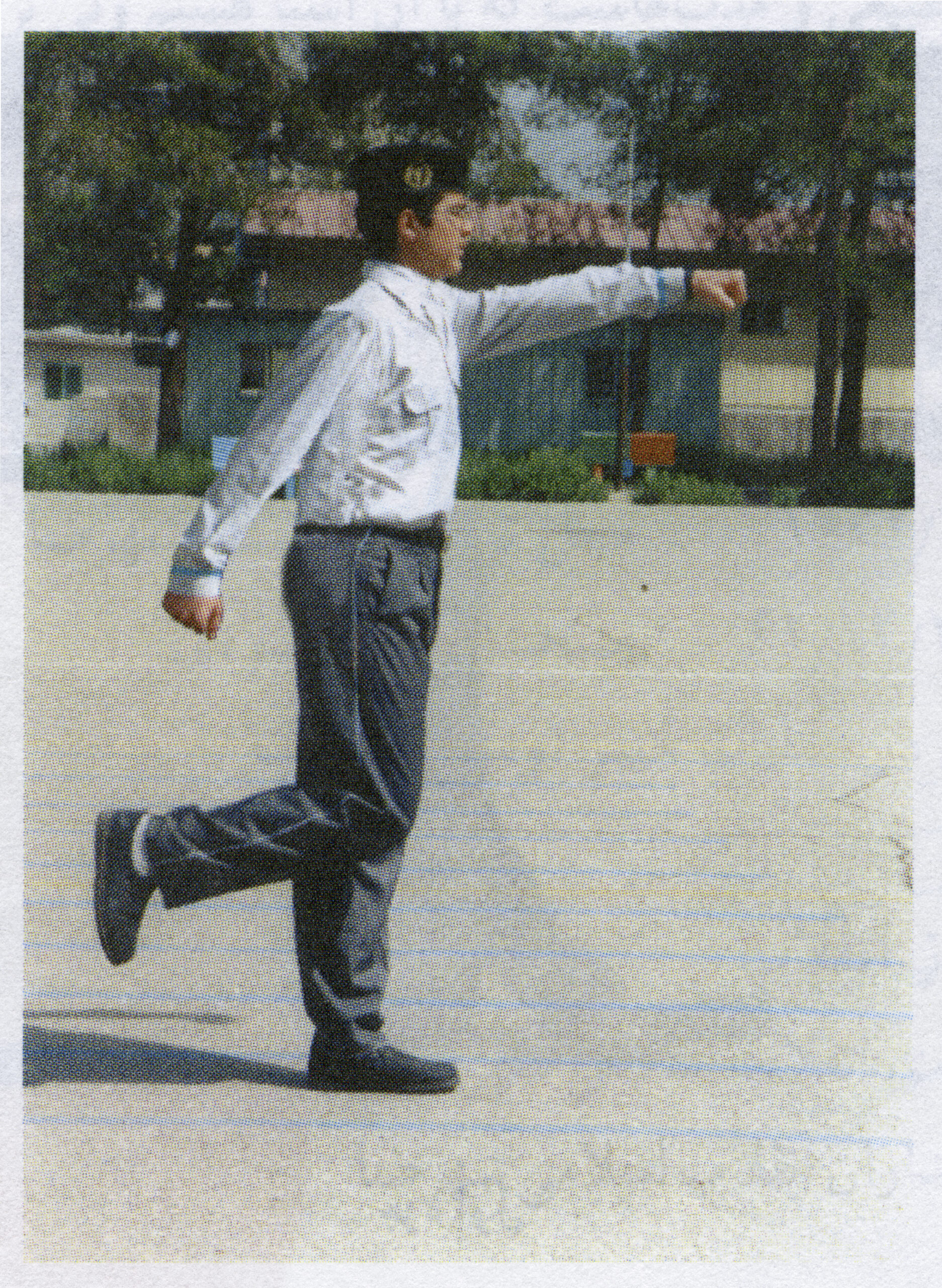
Defensive Readiness: Revised Edition examines the body as a political field shaped through institutional images and state pedagogy. Working with a state-issued military and civil defence textbook once distributed to Iranian high school students, the project explores how bodies are trained to become legible, obedient and operational.
The work intervenes in the textbook on two levels. Selected pages are reproduced and annotated with corrections, darkroom notes and handwritten markings, shifting the language of instruction into a clinical register and revealing how institutional power operates through procedures that resemble care. A second component reenacts poses from the manual through three-dimensional scans, exposing the gap between institutional representation and lived embodiment.
Working across photography, annotation and reconstruction, Defensive Readiness: Revised Edition reflects on how institutions script bodies and how lens-based media can reveal the mechanisms that produce compliance. The project asks what it means to question, refuse and re-inhabit images designed to instruct.
Amin Yousefi (b. 1996, Iran) is a London-based writer, curator and image-based artist. Working across photography, text and installation, his practice examines the social and political dimensions of photography, with a particular focus on archives, state-produced images and the ways visual culture shapes power, memory and perception.
Backlight 2023
FIONA AMUNDSEN
An Ordinary Life, 2021
Tampere Art Museum 17.6.–15.10.2023
Fiona Amundsen’s (b. 1973, New Zeland) practice explores how documentary photographic and filmic images can enable a connected, active and caring relationship to the ramifications of painful historical experiences that live on in the present. She is interested in establishing relationships between specific historical events, the social responsibility of witnessing, and the ethics of documentary photographic and filmic practices. She edits declassified military produced archival imagery with her own present-day photography and filming to investigate the potential for imagery to perform a kind of visual listening and documentary witnessing of acts of colonial imperial violence, be it historical or not.
An Ordinary Life explores the effects of the United States 1945 atomic bombing of Japan. To tell this story, artist Fiona Amundsen has collaborated with Kanariya Eishi, a rakugo performer living in Aotearoa but whose family is from Nagasaki. Referencing rakugo methods of storytelling, Eishi recalls the devastation of the bombs dropped on the city through speaking with the ghost of his grandfather, who was a soldier at the time.
Fiona Amundsen is an Associate Professor in Art Theory/History and Photography in AUT University, Auckland, New Zealand. Kanariya Eishi (b. 1976, Japan) is a Japanese rakugo performer and actor based in New Zealand.
SOLMAZ DARYANI
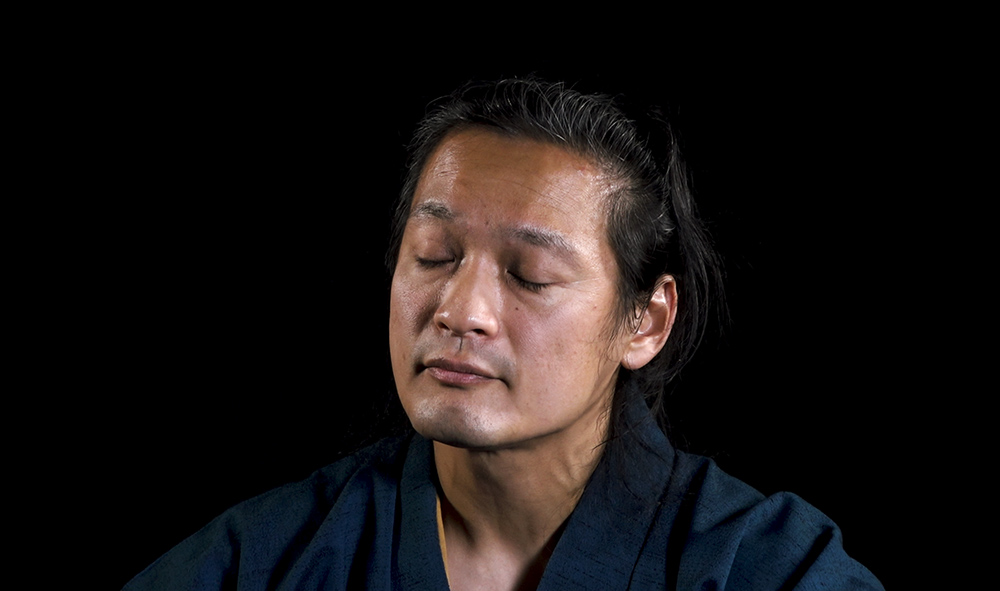
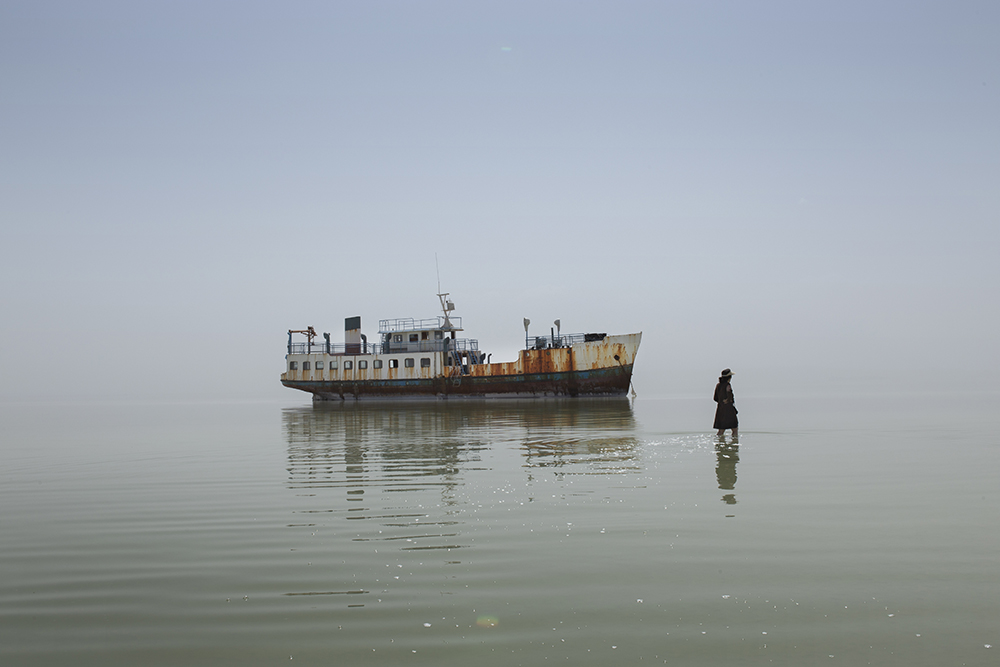
The Eyes of Earth, 2014-22
Tampere Art Museum 17.6.–15.10.2023
Solmaz Daryani (b. 1985, Iran) is a documentary photographer loosely based between Iran and the UK. Her work is mainly known for exploring the themes of climate change and water crises, focusing on humans and their relationships with the environment, communities, and cultures. Since the beginning of her career, she has created several journalistic works over extended periods to understand human behavior and ideas in their social, cultural, religious, and political context.
Her ongoing project, The Eyes of Earth, is a deeply personal story about the environmental disaster at Lake Urmia in the northwest of Iran. Being a popular destination for vacationers only some decades ago, during the past 20 years, approximately 80% of this lake has dried.
Solmaz Dariyani graduated from Azad University with a degree in computer science in 2011. She continued her studies at the Danish School of Media and Journalism (DMJX) in 2020. She started approaching photography as a self-taught photographer in 2012, after independent studies on cinematography.
VELI GRANÖ
False Prophet
Gallery Koppelo 3.6.–2.7.2023
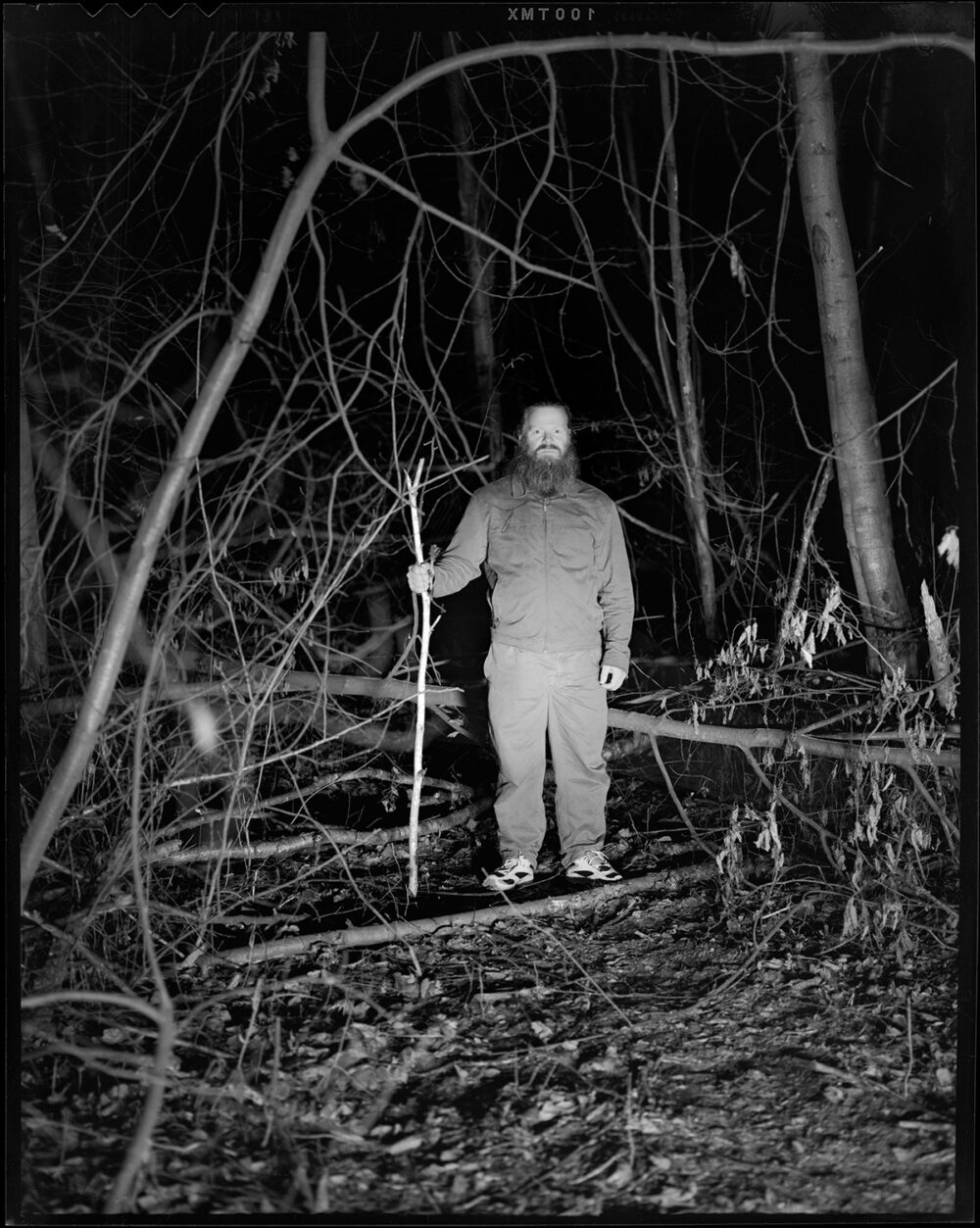
The exhibition False Prophet, much like Veli Granö’s previous exhibitions, explores the complexity of reality. It is a kind of visual-narratory essay. Many of its parts refer to years ago. The oldest pieces of the story can be found on the pages of the heritage library in the slideshow Uni on.
Each image or object in the exhibition is part of its fragmented narrative. The tractor tire tries to merge the paths. It tells about continuity, maybe about farming too, but Harvesting Moments is also a metaphor for life and photography.
Full-scale war has arrived in Europe again. We believed in false prophets and therefore have to face humanity’s most terrible questions again. Questions we thought had already become history. Perhaps history and those who lived before us now speak through our mouths. They guide our hand and our will, even against our wishes. Where did evil come from – is it here too?
The video work Neighbors Grannar points to a bystander. Does innocence exist?
A small, innocent child tries, in the picture entitled The Face I Showed, to see inside the opaque heirloom mirror. The child wants to understand the nature of reality – where is the limit of our knowledge and understanding?
Can the ‘prophet’ show us an alternative way, a passage out of a self-destructive culture?
HNV COLLECTIVE
Atomic, 2020
Gallery Saskia 3.6.–2.7.2023
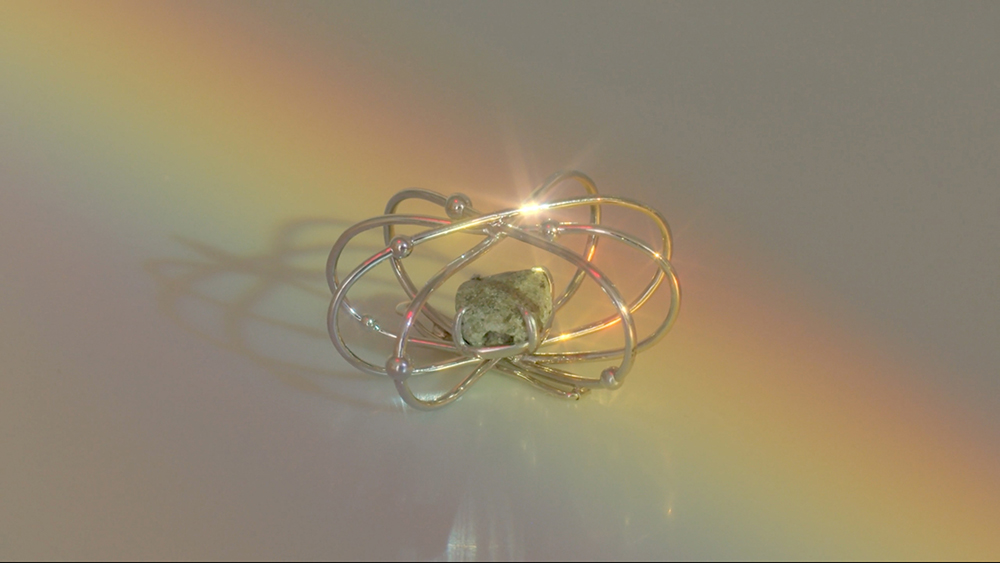
Atomic tells the story of one particular piece of jewellery. Shaped like an atom, the small hair ornament was designed on commission for the US Army. It was made of gold, palladium and a material called trinitite, a by-product of Trinity, the first ever nuclear test that was conducted in New Mexico in July 1945. About a month later the United States dropped two atomic bombs on Japan.
The ornamental object represents a merging of total violence with beautiful form and expensive, sublime and special materials. The piece was worn by Hollywood stars and society beauties at dance balls and other events, and after World War II Miss USA was photographed wearing the highly radioactive, highly dangerous piece of jewellery. The photos spread around the world in newspapers and magazines. The exhibition explores the disparity between propaganda disguised as feminine beauty and the actual effects of the bombs. Through the ornament and its history, it also examines beauty, violence, and the power of the gaze.
The video is a poetic journey that begins and ends at the birthplace of the trinitite: the New Mexico desert where the nuclear test tore atoms apart, stopped all clocks and launched a new era in the history of humanity. The creation of trinitite also marks a break in human and non-human history. The brief nuclear explosion has left long-lasting radioactive effects on the entire planetary ecosystem. Atomic examines these events on a geological scale in terms of both time and space by presenting us pictures of the consequences of human action and of the resilience of the environment.
HNV Collective is a group of three Helsinki-based artists, Felicia Honkasalo, Akuliina Niemi and Sinna Virtanen. The collective uses a range of mediums and materials to investigate issues intersecting art, history and science. Their research-based practice focuses on historical narratives and the interfaces of scientific facts, myths and imagination.
SUSANNE KRIEMANN
Pechblende (Prologue)
Pechblende (Chapter 1)
Photographic Centre Nykyaika 3.6.–31.7.2023
library for radioactive afterlife (uraninite cycle)
Bringing together an assemblage of archival materials, photo documents, literature and found objects, Pechblende investigates concepts of scale, proximity and distance in relation to radioactivity and the body. Centred on the mineral Pechblende (the German word for a type of uraninite), the work traces a history of scientific and photographic processes narrated through the interconnected sites of laboratory, archive, museum and mine. Highly radioactive and rich in uranium, Pechblende was relentlessly mined in the Ore Mountains of the former German Democratic Republic between 1946 and 1989, ultimately facilitating nuclear armament in the USSR. Despite the toxicity of the mines, and the documented health threats to the miners who worked there, the landscape of the Ore Mountains is now under way to being transformed into a tranquil mountain vista, with few recognizable traces of the still-radiating industrial worksites.
Concerned with both the literal and the political invisibility of radioactivity, Kriemann worked with scientists at the American Museum of Natural History (New York), the National Archives (Washington) and the Museum of Natural History (Berlin) to produce various versions of an “autoradiograph”, a unique type of photograph that is the result of directly exposing light-sensitive paper to the Pechblende specimens. This cameraless exposure results in an indexical but highly abstract image, one that is haunted by impressions of the iconic nuclear mushroom cloud and its blinding light.
For Pechblende (Prologue) Kriemann employs analog photographic methods, including autoradiography, combining them with archival material. Aiming to visualise what is invisible and yet acutely present: radioactivity.
In Pechblende (Chapter 1) Kriemann incorporates a range of museum objects, including tools, chains, and clothing, that together refer to the toxic history of uranium mining and its impact on the body of the miner. Illuminating these objects through inverted camerae obscurae, Kriemann reflects on the timebased visibilities and extended exposure processes of radioactivity.
Susanne Kriemann (b. 1972, Germany) lives and works in Berlin. She is a professor of Artistic Photography at the University of Arts and Design Karlsruhe (2017-2023) and co-founder of the artist initiative ABA in Berlin.
Kriemann investigates the medium of photography in the context of social history and archival practice. With an extended notion of the photographic document, she reflects on the world as an analogue ‘recording system’ for human-caused processes. This has led to preoccupations with radioactivity and mining, archaeology, and the notion of slow violence. A focus on ecology is prevalent in Kriemann’s subjects. To perceive polluted areas as vast photosensitive arrays is key to her understanding of landscape. An exceptional feature is the extraction of pigments from the investigated matter and the use of those pigments to produce her pictures.
NOELLE MASON
X-Ray Vision vs. Invisibility, 2020–21
Tampere Art Museum 17.6.–15.10.2023
Noelle Mason (b. 1977, United States) is an interdisciplinary artist whose work is about the insufficiencies of images to communicate important experiential layers that complicate the dialog around and response to disturbing and traumatic rifts in the American cultural fabric. Noelle received her MFA from the School of the Art Institute of Chicago and currently holds the position of Associate Professor of Sculpture at the University of South Florida.
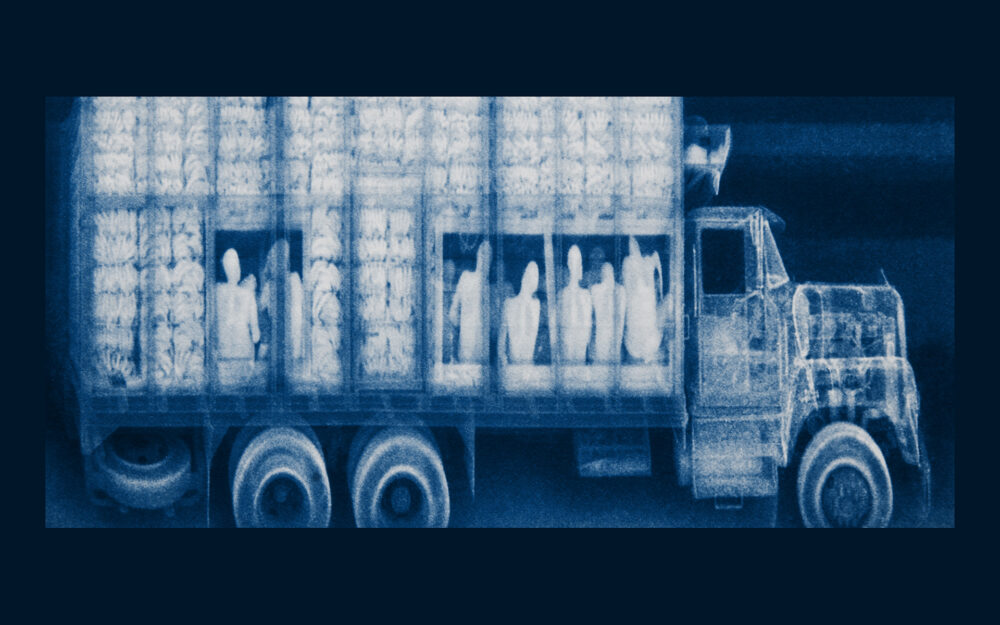
X-Ray Vision vs. Invisibility is a body of work about the phenomenological effects of vision technologies on the perception of undocumented immigrants. This project remediates images of the border into handmade objects to expose how new vision technologies recycle Cartesian modes of viewing both land and body in so doing reinforce a neocolonial social and political relationship with Mexico.
ALI AKBAR MEHTA
Gallery Saskia 3.6.–2.7.2023
More than at any other moment in human history, we are now confronted by contemporary borders manifesting as incarceration camps, penal colonies, detention facilities and refugee centres. Countries are gradually becoming prisons to confine and contain undesirable bodies. The well-being and welfare of citizens and ecology are being replaced by concerns for security and risk management. Conflicts are simply becoming tools for neo-liberal capitalism to recycle pain. Such violence leads to long-term trauma, helplessness and precarity, causing significant negative influences on our social fabric. Yet, in a hyper-digitised world, forms of violence remain invisible or unrecognised. Recognising and narrating such experiences become difficult unless we find ways to understand how violence is defined and applied across micro (interpersonal), meso (institutional), and macro (trans-societal) scales. For these processes to be known, they must be explored, visualised, satirised and challenged.
In times where violence, conflict, and trauma are normalised as everyday happenings, Ali Akbar Mehta’s practice performs the task of critical storytelling of historical narratives. By bringing together local and geographically distant perspectives on constructing historical narratives that shape our political landscape, it encourages its audience to revise and reconsider what stories we tell and how we share them. It casts the audience not as a passive spectator, but as a critical witness.
For Backlight 2023 Photo Festival Cruel Radiance, Mehta shows two separate archival projects that complement and amplify each other:
Purgatory Archive
2016 – ongoing
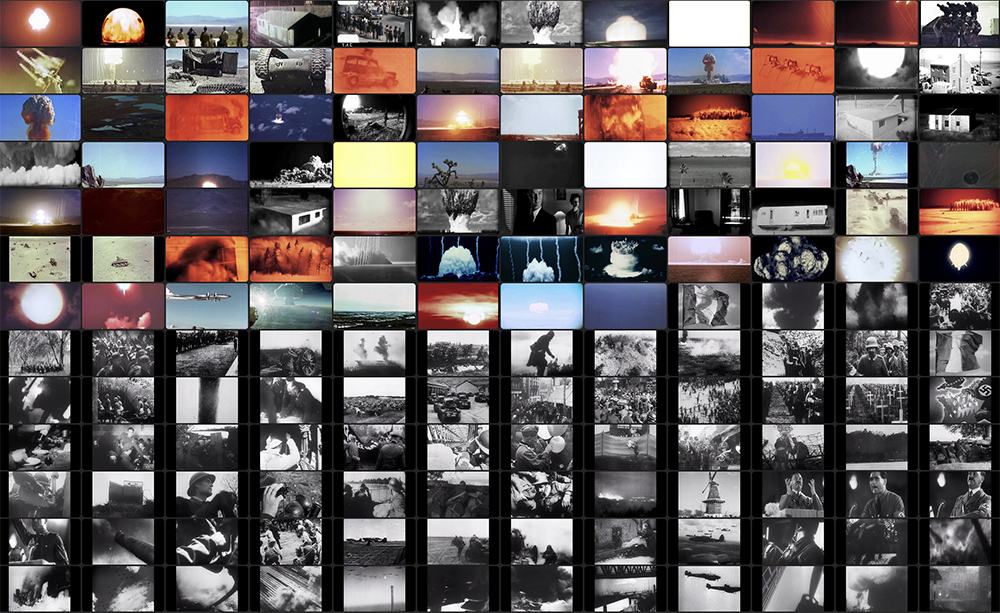
Purgatory Archive is an archive of moving images dealing with the representation of violence and conflict. It is sourced using archival war footage, movie and documentary clips, advertisements, newsreels, landscape panoramas, and home videos that depict violence in categorically different forms. The onsite installation and accompanying online open-access database form an ongoing archive that critiques existing media representations and the glorification of violence and examines the power of hegemonic representation within visual and cinematic vocabularies.
The Purgatory Archive is part of Purgatory EDIT, an “experimental user-generated montage-based cinematic experience”, as a VR project that is currently under development.
War List CODEX
2014 – ongoing
The War List CODEX is a first-of-its-kind archive, a comprehensive list of all the ‘wars, battles, sacks, sieges, revolts, revolutions, bombings & insurgencies’ in the world from 3100 BC to the present. From the ancient Egyptian conflicts of the Upper Nile to the present wars and conflicts in Gaza, Syria, Sudan, Kashmir, and Ukraine – it provides a comprehensive tableau of the history of human beings as a continuous history of violence and conflict – a civil war on a planetary scale.
The War List CODEX, in its multiple iterations, as an archive, performance, publication, and now as an online searchable database, is a core component of WAR ROOM ECHO Regarding the Pain of Other Cyborgs, envisioned as a hybrid museum, shapeshifting between an archaeological site, a war memorial, and a tomb. The title of the project refers to Susan Sontag’s seminal book ‘Regarding the Pain of Others’, where she questions the validity of decontextualized representation of pain and suffering in ‘war photography’.
Both archives exist as ongoing, open-source online projects and are free to access from anywhere. https://cruelradiance.aliakbarmehta.com/
ANASTASIA MITYUKOVA
Project Iceworm, 2019–
Tampere Art Museum 17.6.–15.10.2023
Anastasia Mityukova (b. 1982, Switzerland) is a visual artist based in Geneva. She obtained her BA in photography at ECAL in 2018 and her master’s in contemporary art practices at HEAD in 2021. Her artistic practice is exploring ambivalences of the photographic medium. She is challenging this medium with an approach close to a documentary, using methods of gathering, comparison, field research, trying to deconstruct our knowledge of certain stories and events.
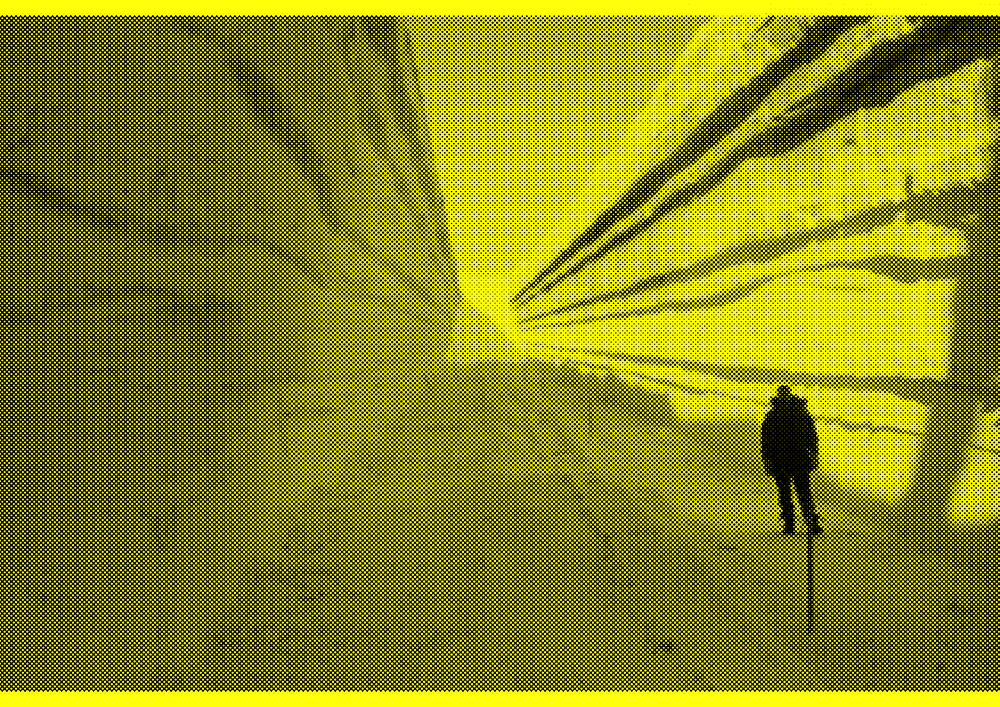
In 1959, the US Army built a military base under the Greenland ice cap to deploy missiles. Due to global warming, nuclear waste left behind after the base was abandoned is resurfacing, threatening the Thule Inuit ecosystem. Mityukova’s installation breaks down events and transgressions: a colonial attitude, destruction and pollution, showing an inaccessible and invisible reality.
SUSAN SCHUPPLI
Cold Cases, 2022
Susan Schuppli (b. 1959, Great Britain) is a researcher and artist based in the UK whose work examines material evidence from war and conflict to environmental disasters and climate change. Schuppli’s current work is focused on learning from ice and the politics of cold. Her creative projects have been exhibited throughout Europe, Asia, Canada, and the US. Schuppli is Director of the Centre for Research Architecture, Goldsmiths University of London where she is also an affiliate artist-researcher and Board Chair of Forensic Architecture.
Susan Schuppli’s project Cold Cases is an assemblage of videos and related materials that explore the politics of ‘cold’ through a series of cases and contexts in which the differential experiences and effects of temperature are entangled with legal questions, human rights violations, but also claims for social and environmental justice. Through the analysis of a series of contemporary as well as historic ‘cold cases’ these videos explore the tactical role of temperature and speculate about the emergence of a new thermo-politics defined by cold. Each of these ‘cold cases’ exposes the degree to which temperature becomes a register of violence. One that includes the legacies of climate colonialism, longstanding socio-economic inequalities, and ongoing structural racism.
ANAÏS TONDEUR
Carbon Black, 2017-18
Gallery Saskia 3.6.–2.7.2023
Collaboration with climate modellers Rita van Dingenen & Jean Philippe Putaud, JRC, European Commission
Despite the absence of industries, the inhabitants of the isle of Fair suffer from suffocation. As Anaïs Tondeur reached the island she sent her geographic coordinates to climate modellers Rita van Dingenen and Jean-Philippe Putaud (JRC, European Commission) who retraced the itinerary of the particulate matters meeting her. By means of atmospheric backward trajectory models and the analyses of anthropogenic emission of air pollutants, they could define the site of emission of the particles. This abstract trajectory line lead the artist to an expedition of 837 miles by foot, ferry, fishing boat and car unravelling the journey of the anthropic meteors.
She crystallised each day in a photograph of the sky as well as filtering black carbon particles she encountered through breathing masks. The particles were later extracted by scientist JP Putaud and turned into ink. In point of fact, black carbon is a collateral form of soot, used for centuries as the primary component of Indian ink. The photographs are thus printed with some ink composed from the particles captured in the sky where they were shot.
Anchored in ecological thought, Anaïs Tondeur searches for a new form of political art. Crossing natural sciences and anthropology, myth making and new media processes, she creates speculative narratives and engages with investigations through which she experiments other conditions of being to the world. Working with photographs, installations, or videos, she seeks a new aesthetic, in the sense of a renewal of our modes of perception, and explores beyond the separation between nature and culture, other modes of relationships with humans and other than humans.
Anaïs Tondeur (b. 1985, France) graduated from Central Saint Martin (2008) and Royal College of Arts (2010) in London. She was awarded the Prix Art of Change 21 (2021) & Ars Electronica Cyber Arts Honorable Mention (2019). She has presented and exhibited her work in international institutions such as the Center Pompidou (Paris), Serpentines Galleries (London), Bozar (Brussels), Biennale Di Venezia, Pavillon French, (Lieux Infinis), Kröller-Müller Museum (Netherlands), Dortmund U, Museum für Kunst und Gewerbe, (Germany), Spencer art Museum (USA), Choi Center (Beijing), Nam June Paik Art Center (Seoul).
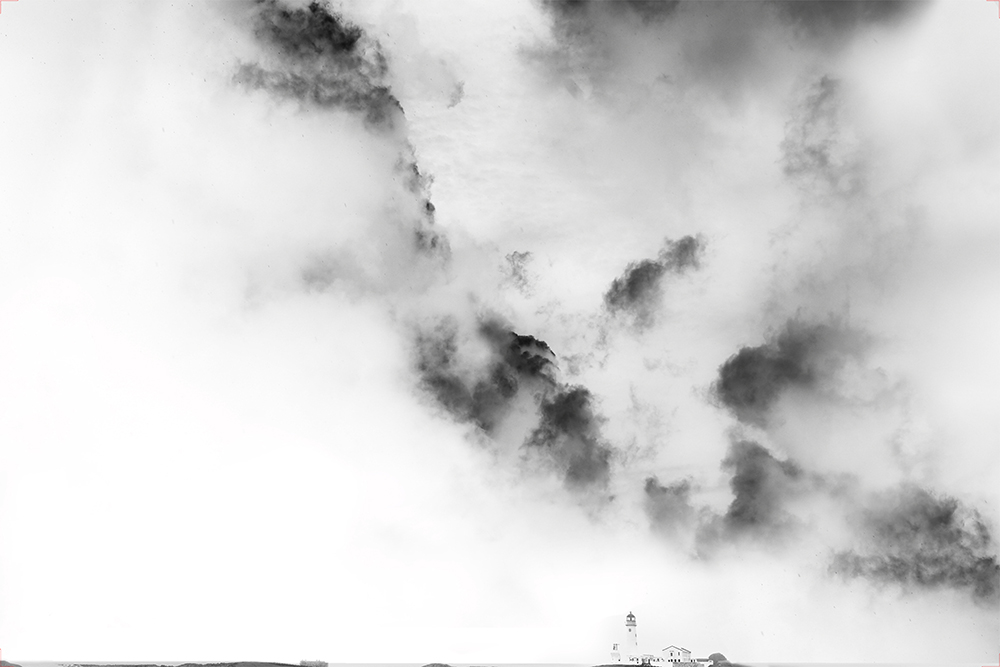
TOSHIO FUKADA
The Mushroom Cloud, 1945
Tampere Art Museum 17.6.–15.10.2023
On the 6th of August, 1945, Toshio Fukada (1928–2009, Japan) heard the blast from the nearby Army Weapons Supply Depot. What he saw was the boiling atomic cloud. He rushed to fetch his camera and find a good spot to observe the scene. These images were taken moments after the event about 2.6 kilometers southeast of the hypocenter. Fukada was 16 at the time of taking the photograph.
After the war, Mr. Fukada ran a camera shop and joined a group of photographers called the Association of Photographers of the Atomic Bomb Destruction of Hiroshima, which was established in 1978. He took photos of buildings of the weapons supply depot as they were being dismantled. Fukada donated the negatives he had carefully kept at home to the Peace Memorial Museum in 2004.
EIICHI MATSUMOTO
Atomic Shadow, 1945
Tampere Art Museum 17.6.–15.10.2023
During World War II Eiichi Matsumoto (1915–2004, Japan) served as staff photographer in the Publications Division, Asahi Shimbun Tokyo Head Office covering the firebombing of several Japanese cities. After the war ended, the newspaper decided to print a special edition on the atomic bombing in its magazine Scientific Asahi. An Asahi reporter and Matsumoto went to Hiroshima and Nagasaki to take photos. He photographed Nagasaki from August 25th to September 15th, 1945 and Hiroshima from September 18th to 25th. Matsumoto’s photographs were subject to media constraints on showing graphic images of the human casualties. One photo of a grave site taken by Matsumoto led to the prefecture digging for and finding human remains in Shukkeien Garden in July 1987.
In the photograph Atomic Shadow, a shadow of the soldier and a ladder are imprinted on the wooden wall of the Nagasaki Military Headquarters 1945.